Monday, November 4, 2024

"Portents of Chaos" by Patrick Lawrence


 Click here for Exit the Cuckoo's Nest's posting standards and aims.

Source: Consortium News

PATRICK LAWRENCE: Portents of Chaos

Save
 

At this moment it is hard to locate the limit of what either of the two main political parties in the U.S. will do to avoid losing.
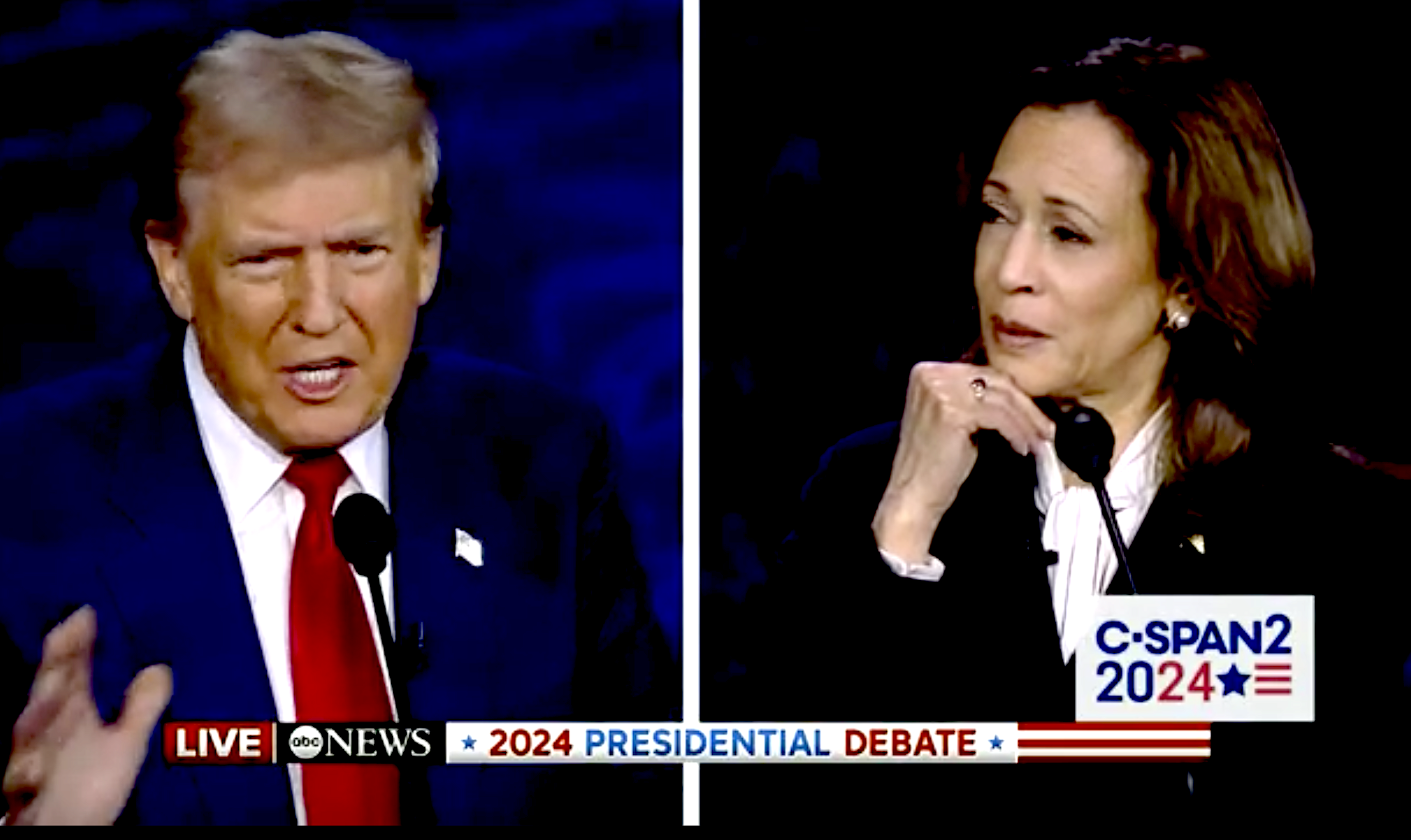
Donald Trump and Kamala Harris during the Sept. 10, 2024, presidential debate on ABC News. (C-Span screen shot)

By Patrick Lawrence
Special to Consortium News
Uh-oh. The New York Times is picking up its familiar theme now that the Nov. 5 elections are but a few days out front: Those mal-intended foreigners are again “sowing discord and chaos in hopes of discrediting American democracy,” it reported in a piece published Tuesday. 

The Beelzebubs haunting this political season, when everything would otherwise be orderly and altogether copacetic among Americans, are Russia, China and Iran.

Why can’t this year’s version of the old, reliable “Axis of Evil” leave us alone with our “democratic process,” the one the rest of the world envies and resents? Troublemakers, with all their “sowing.” You could probably call them “garbage” and get away with it. 

Uh-oh. We’re already reading of tampered voter-registration forms and forged applications to vote by mail in two districts in Pennsylvania, the populous state where the results in 2020 could not have been blurrier and whose 19 Electoral College votes were decisive in getting Joe Biden into the White House last time around.

But not to worry. In a delightful reprise of one of the truly memorable phrases to come down to us from the 1960s, an election commissioner in one of the districts where officials uncovered the malfeasance tells us, “The system worked.” 

I think I understand.  

I tell you, whenever I read of people in other countries sowing anything, whether it is doubt or chaos or disinformation, and at this point even pumpkin seeds, it always turns out the same. This word “sowing” has been a favorite in the mainstream press since 2016, when we read daily — and of this we were to have no doubt — the Rrrrrussians were “interfering in our elections.”  

Since then, everytime I read of someone sowing something it sows more doubt in my mind — more than I already harbored — that one can take our electoral system, as we have it in the 21st century, the slightest bit seriously.  

This is to say nothing of putting one’s name on it behind a little green curtain in a voting booth.

On the one hand you have the Times, which has diminished itself over the past eight years to little more than the Democrats’ house organ, already preparing to suggest that the malign enemies of American democracy corrupted the elections. Believe me, you will hear this if Kamala Harris loses but not if she wins.  

On the other hand, you have early but clear cases of attempted vote-rigging and local election officials waving these cases off as nothing at all to fret about. It is interesting to consider why said officials profess so cavalier a view.  

I have thought for months that the 2024 elections, discord already in plentiful supply, could easily tip over into a degree of civil chaos beyond anything so far recorded in the American story. Just such a day of reckoning now seems to beckon. 

Neither of the main parties appears prepared to lose. At this moment it is hard to locate the limit of what either party will do to avoid losing. 

Remnants of Democracy

All by our lonesome selves, it seems to me, we Americans have made a mess of the remnants of our democracy these past eight years.

This is not to suggest American politics has ever been other than, let’s say, in the way of a barnyard. In this, neither of the major parties, whose function since the mid–19th century has been to circumscribe acceptable politics and policy, is free of responsibility. 

But in the matter of responsibility I assign more to the Democrats than to the G.O.P. It was Hillary Clinton’s loss to Donald Trump eight Novembers ago that confirmed America’s swift drift into post-democracy.

The Democrats have never recovered from the disruption in 2016 of their dream that history was about to end and their idea of the liberal ethos would eternally prevail, all alternatives withering away the way Marx and Engels thought the communist state would.
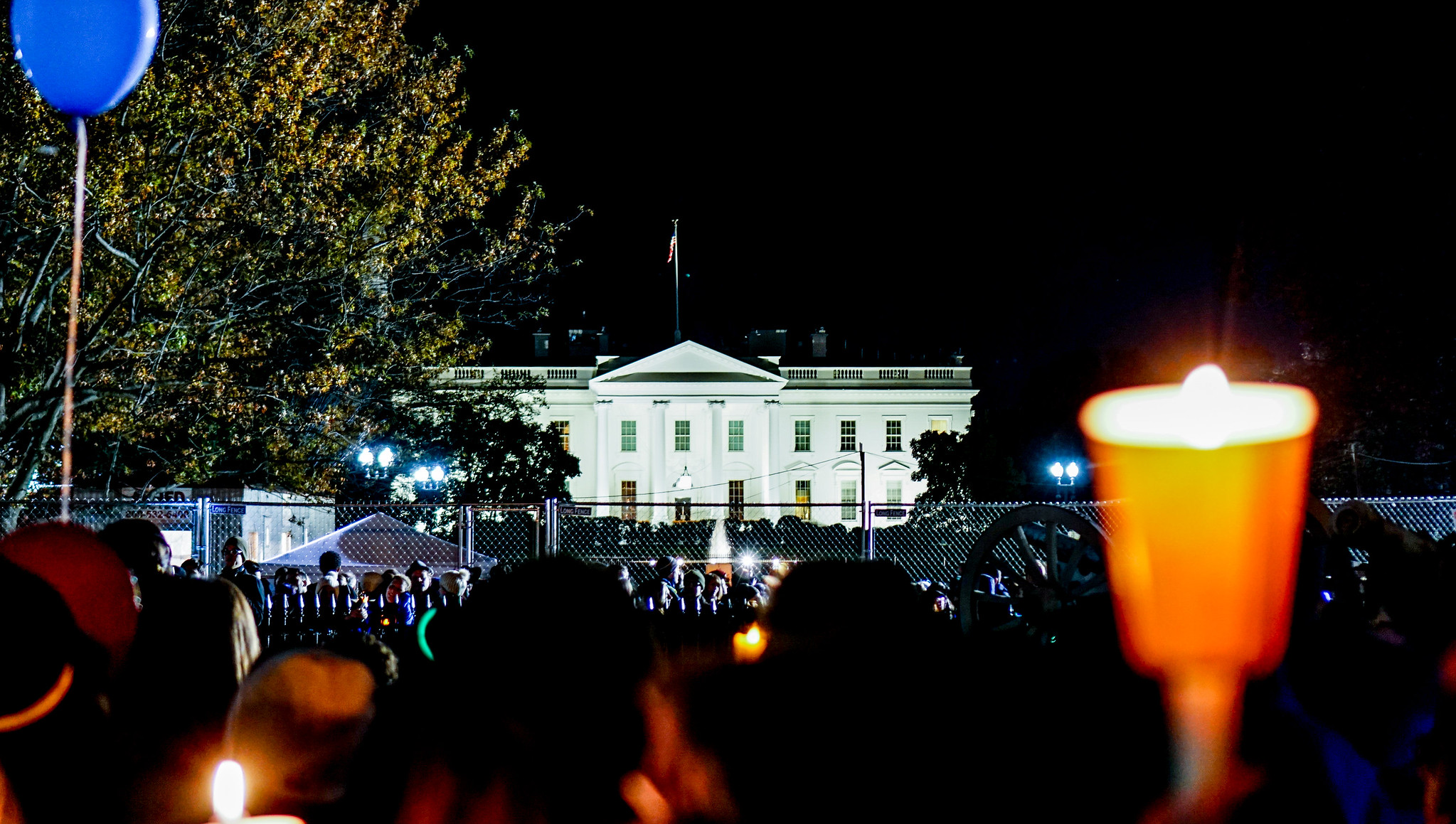
Anti-Trump protest in Washington, D.C., Nov. 12, 2016. (Ted Eytan/Flickr, CC BY-SA 2.0)

I have long detected that American liberalism has at its core a vein of illiberalism that is essential to its character.

America is simply not, to put this point another way, a tolerant nation. It does not encourage its people to think: It requires them to conform. Alexis de Tocqueville saw this coming two centuries ago in the two volumes of Democracy in America. 

We are now, post–Clinton, treated to the spectacle of full-dress liberal authoritarianism, and if you do not like the term there are others. De Tocqueville, prescient man, called it “soft despotism.” I’ve always favored “apple-pie authoritarianism.”

Institutional Corruptions

There is a feature of this awful manifestation among NPR–addicted, kale-eating liberals that distinguishes our time as especially discouraging as to the future.

This is their wanton corruption of some of the institutions without which even a semblance of democratic government is impossible. I am thinking particularly of three that figure in the pre-election picture.

One is the judiciary — federal, state, county, local. Beginning with the Mueller investigation, the in-plain-sight corruption of the Federal Bureau of Investigation, the ridiculous court cases brought against Donald Trump, Attorney–General Merrick Garland’s subversion of the Justice Department to protect President Joe Biden as his son’s influence-mongering schemes came to light — all this in behalf of the Democrats:

Well, as I learned during my days as a correspondent abroad, when the judicial system goes down, the path to failed-state status opens.  

Two is the intelligence apparatus and the military. Intel, from the days of James Clapper and John Brennan, has lined up unequivocally behind the Democrats ever since the brash real-estate man from New York foolishly assumed he could “drain the swamp” — his declaration that he would take on the Deep State.
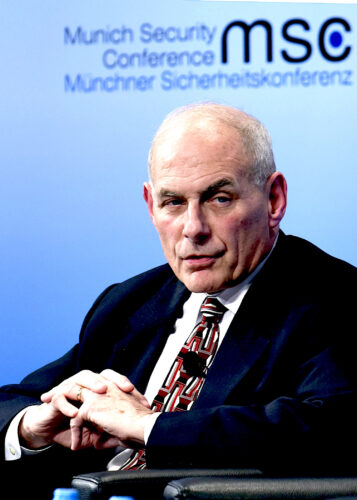
U.S. Secretary of Homeland Security John Kelly at the Munich Security Conference in Germany, Feb. 18, 2017. (U.S. Department of Homeland Security, Wikimedia Commons, Public domain)

As to the military, the generals thought nothing of declaring eight years ago, at the Democrats’ convention in Philadelphia and in open letters published in the Times, that they would refuse the commander-in-chief’s orders were Trump to win and attempt a new détente with Russia and an end to “the forever wars.” 

Yes, you’ve got John Kelly, who served in Trump’s cabinet and then as his chief of staff, suddenly calling Trump a fascist — the Democrats’ favorite epithet these past weeks. Doesn’t anyone want to know why Kelly worked closely with a man he considered a fascist? Doesn’t it occur to anyone — it must, surely — that Kelly, a retired Marine general, says these things to serve the party he trusts to keep the wars going and the tax dollars flowing?  

A paradox here, more apparent than real: John Kelly, H.R. McMaster, James Mattis, Mark Esper, and various others like them did not wear uniforms when they served in the Trump administration, but they never took them off. 

If this election is about anything — apart from the price of groceries, of course — it is about the national-security state’s place in American politics. In our post–2016 era, intel and the military are perfectly welcome to operate openly, unabashedly, in the American political process — this because the Democratic Party gives them a wide berth to do so. 

Deep-State Democracy

Now, do you think the Deep State gives a toot about democratic process? Ask the Italians and the Greeks, the Iranians and the Guatemalans, the Japanese, the South Koreans and the Indonesians, the Chileans and the Venezuelans, and… and damn, ask most of humanity at this point. As others have pointed out since the Russiagate days, what the spooks have long done abroad now visits itself upon the American polity. 

The obvious follow-on: Should we be concerned as to whether the Democrats and these institutional allies would let this election go to Trump just by the vote count? 

I am.

As to the third of the institutions that have corrupted themselves in the Democratic Party cause, may I let mainstream media speak for themselves? Apart from independent publications such as the one you are reading, the intent of American media is no longer to inform the public but to protect the institutions they purport to report upon from the public gaze.   

Trump’s “a threat to American democracy,” Harris its savior: It’s a bust at this point. The New York Times has made itself a re-enactment of The New York Times. The Washington Post under the ownership of Jeff Bezos and this ghastly new chief executive of his, Will Lewis, cannot manage, and doesn’t seem to attempt, even a re-enactment. 

I do not seem to be the only one ill-at-ease at the prospect of mayhem to come after midnight Nov. 5. The Post published a survey Wednesday, conducted in the first half of October, indicating that among voters in the states where the election could go either way, 57 percent are nervous that Trump supporters won’t accept defeat and may resort to violence, while a third of those surveyed think Harris supporters will take it to the street, as they used to say, if the candidate of joy and vibes loses.
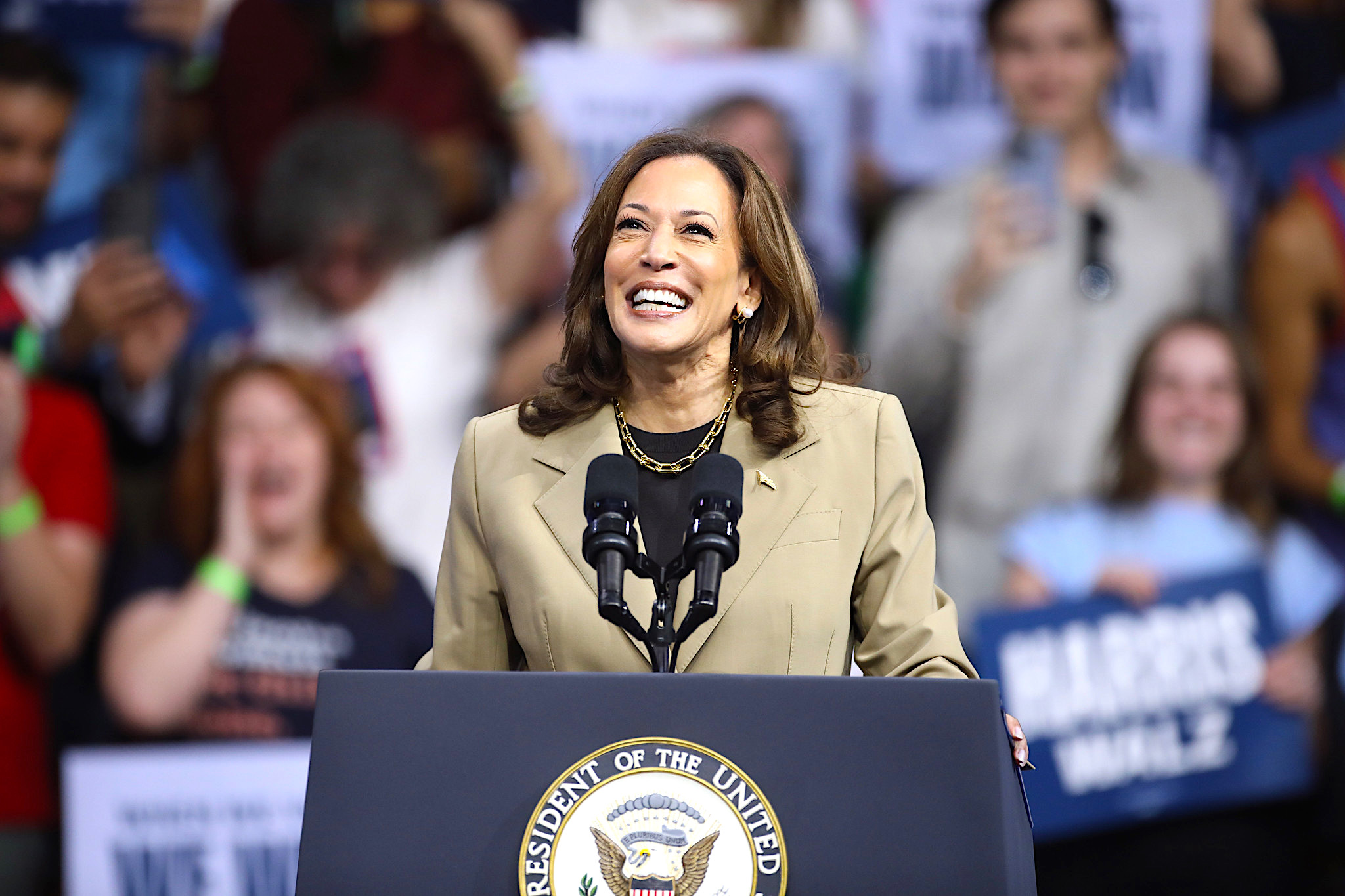
Harris campaigning in Glendale, Ariz., on Aug. 9. (Gage Skidmore, Flickr, CC BY-SA 2.0)

The numbers skewed even more dramatically when The Post asked Democrats about Trump’s people and Trump’s people about Democrats. In a survey The Associated Press published Thursday, you have 70 percent of those polled saying they are “anxious and frustrated.”

Join the party. I cannot, myself, take either candidate seriously. I take seriously the thought that a lot of people will not take the result seriously and a mess will ensue. 

And in this I worry more about Democrats resorting to corrupt conduct than I do the Republicans. Why this, you may ask.

To begin with, I do not at all like the smell of that Times piece quoted at the top of this column. It reeks too strongly of the scene in 2016, when, on either side of the election, the Democrats and all manner of repellent “progressives” conjured of thin air a frenzy of Russophobia from which American has yet to recover. 

Steven Lee Myers, previously of the Times’s Moscow bureau, is now some kind of “disinformation” reporter and led the work on the piece in question. And all is as it was for four years after Clinton’s defeat: no shred of independent reporting or sourcing in anything under his byline. Intel people and other unnamed officials feed this guy like a foie gras farmer feeds his geese. 

This is all you get from our Stevie. And I don’t see anyone trying on this disgraceful stuff in behalf of the Trump campaign. I have suggested my conclusions.

But Jan. 6, Jan. 6, Jan 6! First of all, what happened on Jan. 6 does not rise to “coup” or “insurrection.” It was a protest, with much to suggest the presence of agents provocateurs. And second, there seems to me there was plenty to protest by that point. 

Straight off the top, there was the liberal authoritarians’ perfectly legible collusion to suppress the contents of Hunter Biden’s vastly incriminating laptop computer three weeks before the vote, to the point of blanket censorship of the New York Post, the oldest newspaper in America. If this was not open-and-shut election interference someone will have to tell me what constitutes it.

On less certain ground, I have read of many election officials in many states, Pennsylvania high among them, certifying the 2020 results. But a truly convincing, here-are-the-numbers case for these results in states such as Pennsylvania is hard to come by. You never read of Trump’s claims that the Pennsylvania results were rigged. You read only and always of Trump’s “false claims” or “discredited claims” or “disproven claims” to the point you start thinking of Lady Macbeth and how she doth protest too much, methinks.   
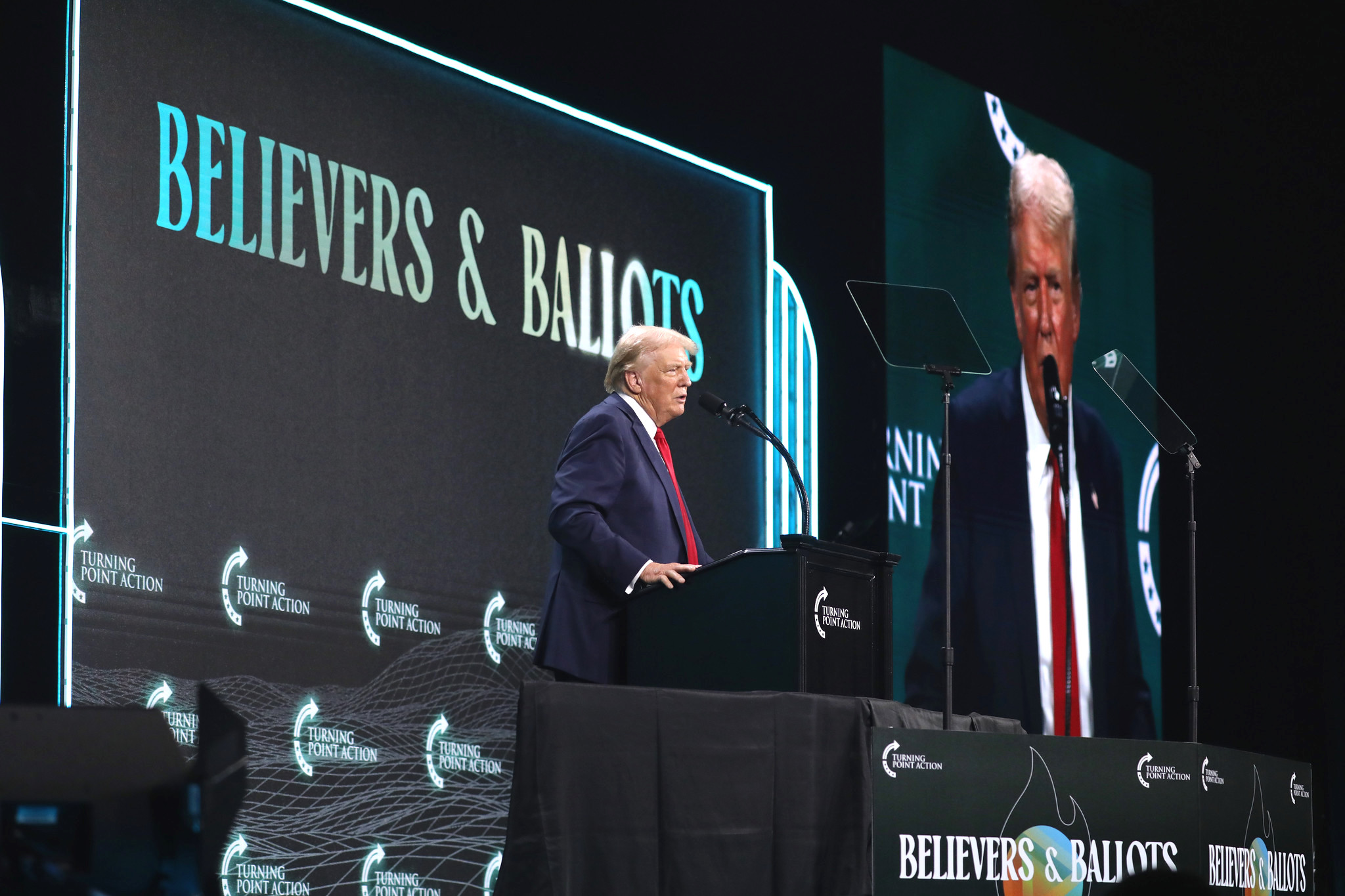
Trump addressing The Believers religious group, in July in West Palm Beach, Fla. (Gage Skidmore, Flickr, CC BY-SA 2.0)

I recall, very imperfectly, seeing research purportedly done by a computer scientist at one of the universities in Philadelphia. Just after the election he or she put out a series of screenshots on social media, time-stamped to the second, that appeared to show the results in a significant number of districts changing all at once and by enough to give Biden a swift come-from-behind victory by a margin of slightly more than 1 percent.  

Genuine or a put-up job, this research? Credible or not credible? I would not dream of judging it, but this is not my point. My point is that there should be no cause to doubt such results as these and, eight years on, as I read it there still is. 

Doubt recreates itself, as you may have noticed, like some organism that regenerates. So we come to the Times’ report Tuesday of attempted voter fraud in Lancaster and York counties, two populous areas of, once again, Pennsylvania.

Campbell Roberston’s piece has just about everything, starting with a headline that has Trump “sowing doubt.” He, Trump, is even “using reports about suspicious voter registrations to cast the election as already flawed.” 

What a cad. What a scoundrel. What a… fascist tyrant. 

It seems that some thousands of forged or otherwise fraudulent voter registration forms and requests to vote by mail arrived recently in the offices of the Lancaster and York election authorities.

So far as one can make out, some official or officials in each county brought these “large batches” of falsified government documents to light. Whereupon other officials in each case smothered this discovery as if suffocating the matter with a pillow. 

Alice Yoder, an election commissioner in Lancaster, put it best, or anyway most preposterously. “The system worked,” saith Ms. Yoder. “We caught this.” I honestly had to read this quotation several times to believe anyone would say this. 

I would like to know a few things about this case that we are not told. 

The batches of forgeries “were submitted by out-of-state canvassing groups,” Robertson reports, groups that remain unidentified.

One, what are canvassing groups and what do they do in whose behalf? Two, what were such groups doing in Lancaster and York counties if they are not from Pennsylvania?

Three, if they are not from Pennsylvania, what were they doing with Pennsylvania election forms that were purportedly genuine?

Just two more questions.

Four, why are the election officials in these two counties not naming the guilty canvassing organizations? This seems to me very troubling. 

And five, what are the party affiliations or otherwise the voting preferences of officials who will not identify the offending organizations and say things such as “The system worked.”

There are no grounds to draw any conclusions whatsoever on this point, given we know absolutely nothing about these people, but I went to the trouble of looking up Ms. Yoder’s c.v. 

There is a bit of the sociologist in all of us, well– or underdeveloped as the case may be. Journalists often make use of their endowments in this line.

Drawing on mine, I would speculate that Ms. Yoder’s c.v., after a careful peruse, is highly suggestive of a Kamala Harris voter, perhaps even of a liberal authoritarian. 

Could be dead right, could be dead wrong. I cannot go beyond more or less idle speculation.

And not more or less idle doubt as Nov. 5 draws close.

Patrick Lawrence, a correspondent abroad for many years, chiefly for The International Herald Tribune, is a columnist, essayist, lecturer and author, most recently of Journalists and Their Shadows, available from Clarity Press or via Amazon.  Other books include Time No Longer: Americans After the American Century. His Twitter account, @thefloutist, has been permanently censored. 


"Unleashing Chaos" by Laura Ruggeri

  Click here for Exit the Cuckoo's Nest's posting standards and aims.

Source: Strategic Culture


Thanks to Who D Who for contributing this article.

Unleashing Chaos

Laura Ruggeri
15 min read

Responses to the first crisis of U.S. hegemony unleashed forces that ultimately eroded its power


Gene Sharp, widely considered the godfather of color revolutions, published his first book, the three-volume The Politics of Nonviolent Action, in 1973, at a time when the U.S. was mired in a series of crises – economic, political, military – that were eroding confidence in its government domestically and thwarting its geopolitical ambitions. The response to those crises – expansion of its hegemony through conventional and hybrid warfare often outsourced to non-state actors, financialization of the economy and weaponization of the dollar – set the course for the following decades. After fifty years it is abundantly clear that though these responses disrupted the post-war global order and led to the U.S. ‘unipolar moment’, they did nothing to address issues that are systemic and structural. If anything, these ‘solutions’ created more, and more intractable, problems for the hegemon that culminated in the crisis of legitimacy the U.S. is currently facing.

The Politics of Nonviolent Action was based on a research, funded by the U.S. Department of Defense, that Sharp had conducted while studying at Harvard in the late 1960s when the university was the epicenter of the Cold War intellectual establishment – Henry Kissinger, Samuel Huntington, Zbigniew Brzezinski were all teaching there. At first glance it might seem contradictory that Gene Sharp’s research topic would draw the interest of both the Pentagon and the CIA. In fact, it is far from surprising: the defeat and losses suffered in Vietnam had left a deep wound in the American psyche, and internationally this brutal imperialist aggression had fueled a strong anti-American sentiment. Moreover, as the U.S. hegemony started to hit the skids, fears mounted over the economic cost of the arms race with Moscow.

Sharp’s theory and practical guidelines for its implementation seemed to provide the solution Washington was seeking to bolster its power, and undermine its geopolitical, ideological and military rival, the Soviet Union.

Sharp, who would later be described as the “Clausewitz of nonviolent warfare,” offered an alternative to the dominant view that security and defense must be provided by the state. As early as the 1960s the executive branch had encouraged the outsourcing of non-inherently governmental functions to private firms. The practice would gradually increase and eventually extend to military functions – at the end of the Cold War military contracting exploded. It became so prevalent that The New York Times called contractors the fourth branch of the government [1].

The strategy and tactics outlined by Sharp would enable the U.S. to weaponize social forces behind the Iron Curtain without triggering a military conflict, an option deemed too dangerous since the Soviet Union had thousands of nuclear warheads. But most importantly, the job of capturing intellectual elites, inciting division and conducting ideological infiltration could be outsourced to non-state actors such as NGOs, media organizations, lobbies, religious groups, aid agencies, and transnational diaspora communities. As the number of stakeholders and their agendas increased, so did their involvement in shaping the national and foreign policy of the U.S. But as the saying goes, too many cooks in the kitchen spoil the broth.

In those years Washington was contending with another formidable challenge to its hegemonic ambitions. A negative balance of payments, growing public debt incurred during the Vietnam War and monetary inflation by the Federal Reserve caused the dollar to become increasingly overvalued. The drain on U.S. gold reserves culminated with the London Gold Pool collapse in March 1968. By 1970, the U.S. had seen its gold coverage deteriorate from 55% to 22%. In 1971 more and more dollars were being printed in Washington than being pumped overseas. Does it sound familiar?

The U.S. leadership decided to scuttle the gold-backed dollar and thus revolutionize the system of monetary management known as Bretton Woods.

The Bretton Woods system for more than two decades had guaranteed economic growth and a relative paucity of financial crises but throughout most of the 1960s the dollar had struggled to maintain the gold peg and contain the rising economic power of Germany and Japan. At the Rome G-10 meeting in November 1971, U.S. Treasury Secretary, John Connally told his counterparts “The dollar is our currency, but your problem.” This blatant expression of arrogance set the tone and aptly described what would become an exorbitant privilege.

In 1973 when the dollar switched to floating exchange rates its value fell 10%. A few years later, in his book The Alchemy of Finance, George Soros gloated over this ‘revolution’: “Exchange rates were fixed until 1973; subsequently, they became a fertile field for speculation.” Incidentally, the preface of this book was written by Paul Volcker the under secretary of the Treasury for international affairs from 1969 to 1974 who had played an important role in President Nixon’s decision to suspend the gold convertibility of the dollar.

The unilateral decision to sink the Bretton Woods order firmly established the U.S. dollar as the currency of choice for international reserves at many central banks, and elevated U.S. debt to being de facto international money. This new regime based on global floating exchange rates increased capital movements but restricted the policy choices of major countries – under the enormous pressure of capital flows, they were forced to accept conservative monetary policies and to abolish Keynesian expansionary fiscal policies.

Under the new regime, the U.S., unlike other countries, was allowed to run massive debt and print money to weather economic crises, and when excess liquidity drove up global inflation the Fed would raise interest rates and tighten monetary policy. This move would then widen its interest rate gap with other countries, consequently attracting international capital to Wall Street. From 1973 onwards the U.S. has abused its privilege of printing the world’s main reserve currency and has wielded the dollar as a weapon. It was only a matter of time before the inevitable backlash.

The Sorcerer’s Apprentices

Due to the division of academic fields into distinct disciplines, each with its own research focus, so far no one has noticed the strange concurrence of events that I have briefly outlined. The publication of Gene Sharp’s first work, aptly described as a Hybrid War field manual, coincided with the end of Bretton Woods, a turning point that gave new impetus to the financialization of the American economy. Finance was ‘liberated’ from any functional connection to the real economy, becoming a source of great wealth from speculation but also the grand destabilizer of both the domestic and global economy.

Those who had a vested interest in this ‘liberation of the economy’ invested millions of dollars in the ‘liberation from Communism’ and the grooming of new elites that would put an end to the controlled economies and politics of the Eastern Bloc. The fall of the Berlin Wall led to what George Soros called an “explosive period of growth” for his hedge fund.

Though a single coincidence might be dismissed as chance, when multiple coincidences align, they suggest an underlying pattern. Once you notice it, you may discover a reinforcing loop, sequences of mutual causes and effects.

The demolition of the existing international monetary order enabled by the demise of Bretton Woods marked a turning point: the structure of the economy, the distribution of wealth, and the distribution of power changed dramatically. While large multinational companies and financial capital organized a takeover of political power, labor and middle-class interests were pushed to the side-lines. Dollar dominance in the global financial system led to an era of hyper-globalization characterized by the primacy of shareholder capitalism, with deregulation and privatization acting as its handmaidens.

Left unchecked, capital is naturally footloose and expansionistic, always seeks to maximize profit. Once money became virtually free and investment risks could be easily offset, it went looking for investment opportunities abroad, relocated production and supply chains, leaving behind a long trail of socio-economic devastation.

As Vladimir Lenin pointed out over a century ago, “The non-economic superstructure which grows up on the basis of finance capital, its politics and its ideology, stimulates the striving for colonial conquest.

Since we are speaking of colonial policy in the epoch of capitalist imperialism, it must be observed that finance capital and its foreign policy, which is the struggle of the great powers for the economic and political division of the world, give rise to a number of transitional forms of state dependence (…) The export of capital, one of the most essential economic bases of imperialism, still more completely isolates the rentiers from production and sets the seal of parasitism on the whole country that lives by exploiting the labor of several overseas countries.”

Giovanni Arrighi dealt critically with the Leninist theory of imperialism, cleared up some of its ambiguities, observing that it is virtually the only theory of Marxism to which non-Marxist economists give serious consideration. Arrighi [3] explained that whenever a previous phase of commercial/industrial capitalist expansion reaches a plateau, a predominance of finance capitalism is a recurring, long-term phenomenon. Whereas by mid-century the industrial corporation had displaced the banking system as the prime economic symbol of success, the late twentieth-century growth of derivatives and of a novel banking model ushered in a new period of finance capitalism.

The relative decline of both U.S. hegemony and its core economy in the 1970s had obviously alarmed American elites. The production of profit from the manipulation and global expansion of financial capital promised to solve the crisis of both state and capital by bolstering American hegemony. But as it became the biggest and most profitable sector of the economy it would hold the government hostage to its interests. The success of monetary policy led to it being the chief method with which policymakers tried to address economic problems. This, in turn, facilitated the increasing financialization of the U.S. economy and the movement of American capital abroad along with its relentless de-industrialization in the United States.

But let’s return to Gene Sharp. Ten years after publishing his seminal study on ‘civil disobedience’, Gene Sharp joined hands with Peter Ackerman to found the Albert Einstein Institution – despite its name it had nothing to do with the physicist. Ackerman was a banker who had amassed a fortune with junk bonds when he headed international capital markets at Drexel Burnham Lambert, an American multinational investment bank that in the mid-Eighties had become Wall Street’s most profitable firm, with earnings of $545 million on revenues of more than $4 billion before going bankrupt.

The Albert Einstein Institution (AEI) would soon be integrated into the apparatus of the U.S. stay-behind network interfering in the affairs of allied states, whitewashing covert actions, orchestrating regime change operations and color revolutions in any country deemed an obstacle to the global expansion of Anglo-American capital and its neoliberal ideology.

In 2005 Thierry Meyssan researched AEI and outlined its involvement in these operations. AEI has since continued to play an active role in all the color revolutions that failed or succeeded in overthrowing governments and destabilizing sovereign countries.

While AEI claims to be an independent non-profit, it has significant connections to the U.S. defense and intelligence community. One prominent AEI consultant was Colonel Robert Helvey, former dean of the National Defense Intelligence College. AEI’s regular donors included U.S. government-funded organizations like the U.S. Institute for Peace, the International Republican Institute, and the National Endowment for Democracy (NED) which was set up in 1983, the same year as AEI.

NED’s purpose was to serve as an umbrella group for a network of democracy-promotion NGOs such as the National Democratic Institute (NDI), the International Republican Institute (IRI), the Centre for International Private Enterprise (CIPE), the Centre for International Media Assistance (CIMA) et al.

All the above groups, and many more that have mushroomed since, have a lot in common. They are so organic to American imperialism that in 2001 Joint Chiefs of Staff chairman Colin Powell referred to human rights groups and NGOs as “force multipliers and an important part of our combat team.”

They operate in the gray zone between Hard and Soft Power – no longer juxtaposed but conceptualized as a continuum integrated into a single framework – and receive tax-deductible donations from corporate-financier groups (often indirectly through the think-tanks they control) in addition to state funding. As the lines between NGOs and government are blurred due to the pervasive “revolving door” dynamic, their members have the power to shape domestic and foreign policy.

George Soros jumped on the color revolution bandwagon not only because of his visceral hatred for Communism and the Soviet Union. In 1973, as the Bretton Woods system, and fixed exchange rates, came to an end, Soros co-founded the Soros Fund Management (later renamed Quantum Fund). From 1973 to 1980, the portfolio gained 4,200% while the S&P advanced about 47%. In a book he published in 1987, The Alchemy of Finance, Soros expounded his ‘theory of reflexivity’ highlighting that market participants not only respond to information but can also influence the market ‘reality’ by their beliefs, biases, desires and actions, thus creating feedback loops that drive markets but also boom/bust cycles. “In financial markets expectations about the future have a bearing on present behavior. But even there, some mechanism must be triggered for the participants’ bias to affect not only market prices but the so-called fundamentals which are supposed to determine market prices (…) The thinking of participants, exactly because it is not governed by reality, is easily influenced by theories. In the field of natural phenomena, scientific method is effective only when its theories are valid; but in social, political, and economic matters, theories can be effective without being valid. Whereas alchemy has failed as natural science, social science can succeed as alchemy. The historical process, as I see it, is open ended. Its main driving force is the participants’ bias.” [4]

Though it’s well known that the psychology behind market movements is a complex interplay of emotional and cognitive biases, Soros didn’t simply leverage on these biases to manipulate markets, his ambition was to manipulate historical processes through “social alchemy”. In several interviews Soros explained that he was guided by exactly the same philosophy in his ‘philanthropic activities’ in Eastern Europe as in the financial markets.

To this purpose he funded an army of social and political activists who would take part in color revolutions, bankrolled parties, media outlets, infiltrated and lobbied educational institutions, governments and supranational organizations through his NGOs. The weaponization of human rights, exploitation of domestic grievances, and support of ultra-liberal, progressive forces deepened rifts in society and achieved the sort of partisan and ideological polarization that would unleash chaos not only in the countries where Washington sought regime change, but in the U.S. too. The results of the ‘social alchemy’ of this sorcerer’s apprentice are there for all to see.

However, for parasitic financiers like Soros crises are just an opportunity to increase their power and line their pockets. Hedge funds profit from geopolitical instability and stock market volatility. Political chaos, boom and bust cycles are their bread and butter because when investors are worried, they want to be hedged.

He Who Sows the Wind Will Reap the Whirlwind

The destabilization of the monetary order, and the destabilization of the post-1945 world order through color revolutions laid the ground for American-led globalization and gave impetus to the financialization of the U.S. economy. In the 1970s and 1980s we witness the increasing removal of capital controls by national governments worldwide, and in the U.S. the gradual erosion of the Glass-Steagall Act (1933) that, in response to banking crisis had imposed the separation of commercial and investment banking. The Act would eventually be repealed in 1999.

The turn to neoliberalism produced the State decentralization that Sharp, Soros and others of their ilk favored. In a capitalist society when you transfer authority and responsibility of major government functions to ‘civil society’ and the private sector, you don’t strengthen democracy, you actually transfer power to multinational corporations, various supranational oligarchic clans and lobbies.

Under the pressure of capitalist relations all that is solid melts into air, all that is holy is profaned, to paraphrase Marx. The reduction of all human relations to the “cold cash nexus” in an increasingly marketized and commodified society means that customs, practices, and institutions on which people have relied or which they have valued in non-commercial terms cease to exist or remain only as parodies of themselves or empty abstractions. Before long, the system breeds a new species: Marx labels it “a new financial aristocracy, a new variety of parasites in the shape of promoters, speculators and nominal directors, a whole system of swindling and cheating by means of corporation promotion, stock issuance, and stock speculation.” Marx knew in the 1860s that the general law of capitalist accumulation could be modified by many circumstances. But in every case, it “followed that in proportion as capital accumulates, the situation of the worker, be their payment high or low, must grow worse.” [5] And that’s where we are now.

The new Dollar-Wall Street Regime [6], to borrow Peter Gowan’s definition, gave rise to a parasitic rentier class that would benefit from chaos because it was well positioned to take advantage of any crisis to increase its power. This class had a vested interest in destabilizing and overthrowing governments that resisted the long march of neoliberalism and its ideological underpinning. And to this purpose it joined hands with Anglo-American intelligence apparati, created a mind-boggling network of NGOs and think tanks to advance its objectives, build clientele, dole out favors.

Once the Soviet Union collapsed, the Dollar-Wall Street Regime identified in Nation-States the new obstacle to a capitalist world-empire with the U.S. occupying its commanding heights, imposing its rules, flouting or adapting them to suit its perceived interests.

Fueled by money-printing and unsustainable debt, the U.S. superficially looks wealthy, but is actually teetering on the edge. Under the cover of ‘boom and bust’ rot and decay have set in, and the parasitic rentier class has weakened its host. Sure, the U.S. is still trying to punch above its weight, but the global balance of power has already shifted.

The flouting by the U.S. of multilateral conventions whenever these conventions interfered with its interests is an indicator of the weakness, not the strength. Double standards and blatant hypocrisy have eroded American legitimacy.

American corporations, financial institutes, NGOs and media became integral to U.S.-led globalization as they developed a multi-faceted governance paradigm that extended to all sectors of society. Over a hundred years ago, drawing on the analysis of rent-seeking capitalism provided by both Marxist and liberal economists, Lenin reached the following conclusions, “Monopoly under capitalism can never completely, and for a very long period of time, eliminate competition in the world market. The tendency to stagnation and decay, which is characteristic of monopoly, continues to operate, and in some branches of industry, in some countries, for certain periods of time, it gains the upper hand. The export of capital, one of the most essential economic bases of imperialism, still more completely isolates the rentiers from production and sets the seal of parasitism on the whole country that lives by exploiting the labor of several overseas countries.”

Ironically, what looked like an expression of power, monopoly and dollar dominance, resulted in the erosion of that same power. Private groups, and their interests, have been allowed to shape national and foreign policy but they can’t develop a grand strategy that would enable the U.S. to prop up its waning hegemony.

The U.S. is now going through another crisis after it overcame the 1970s one through the financialization of its economy, delocalization of industrial production, geopolitical expansion through conventional and hybrid warfare and the weaponization of the dollar. The limits of that strategy have been reached and ascending powers have demonstrated a stronger resilience and power of attraction than the U.S. imagined. The 2008 global financial crisis not only revealed the weakness of U.S. hegemony, it also showed the relative strength that the Chinese economy had acquired. This strength, combined with social cohesion, an emphasis on win-win cooperation with foreign partners rather than control and domination, imposition of arbitrary rules and ideological diktats, proved particularly attractive. In the year following the 2008 financial crisis Brazil, Russia, India, and China held the first leaders summit in Russia under the name BRIC and South Africa joined them in 2010. The BRICS initial focus was on improving the global economic situation and reforming financial institutions. As these five countries shared a vision of non-interference and a commitment to a true form of multilateralism in which countries are equal partners, they gradually increased their cooperation and attracted to the group emerging countries that also advocated a reform of global governance and a fairer world order.

This new reality of sovereign countries determined to defend their national interests contrasts with the flawed neoliberal thesis of transnational capitalism in which interdependence and integrated global chains would overcome the rivalry between national states. Countries of the Global South are rejecting this thesis because they understand that the dilution of their sovereignty doesn’t lead to peace, but in fact to neocolonialism – their subordination to the interests of Western finance and multinational corporations. As neoliberalism showed its totalitarian nature and the old hegemonic power shot itself in the foot by weaponizing the dollar and relying on double standards, coercion, war and chaos to impose its rules and anti-values, it’s hard to see how the U.S. can continue to lay claims to international leadership.

The current crisis of legitimacy is far more serious than those the U.S. weathered before – de-dollarization is shaking one of the main pillars of its power and reshaping the global economy. The impact will be acutely felt in the U.S., where de-dollarization will likely lead to a broad depreciation and underperformance of U.S. financial assets versus the rest of the world.

[1] Martha L. Phelps, A History of Military Contracting in the United States, in The Routledge Research Companion to Outsourcing Security, 2016

[2] Vladimir Lenin, Imperialism, the Highest Stage of Capitalism, 1916

[3] Giovanni Arrighi, The Long Twentieth Century: Money, Power and the Origins of Our Time, 2010

[4] George Soros, The Alchemy of Finance, 1987

[5] Karl Marx. Capital Vol.1

[6] Peter Gowan, The Global Gamble: Washington’s Faustian Bid for World Dominance, 1999

Disqus