Showing posts with label world history. Show all posts

Thursday, October 5, 2023

"No 'End of History' in Ukraine" by Scott Ritter


Click here for Exit the Cuckoo's Nest's posting standards and aims. 

SCOTT RITTER: No ‘End of History’ in Ukraine

Save
 

Francis Fukuyama’s triumphalist post-Cold War vision of liberal democracy — published in 1989 — had a major blindspot. It omitted history.
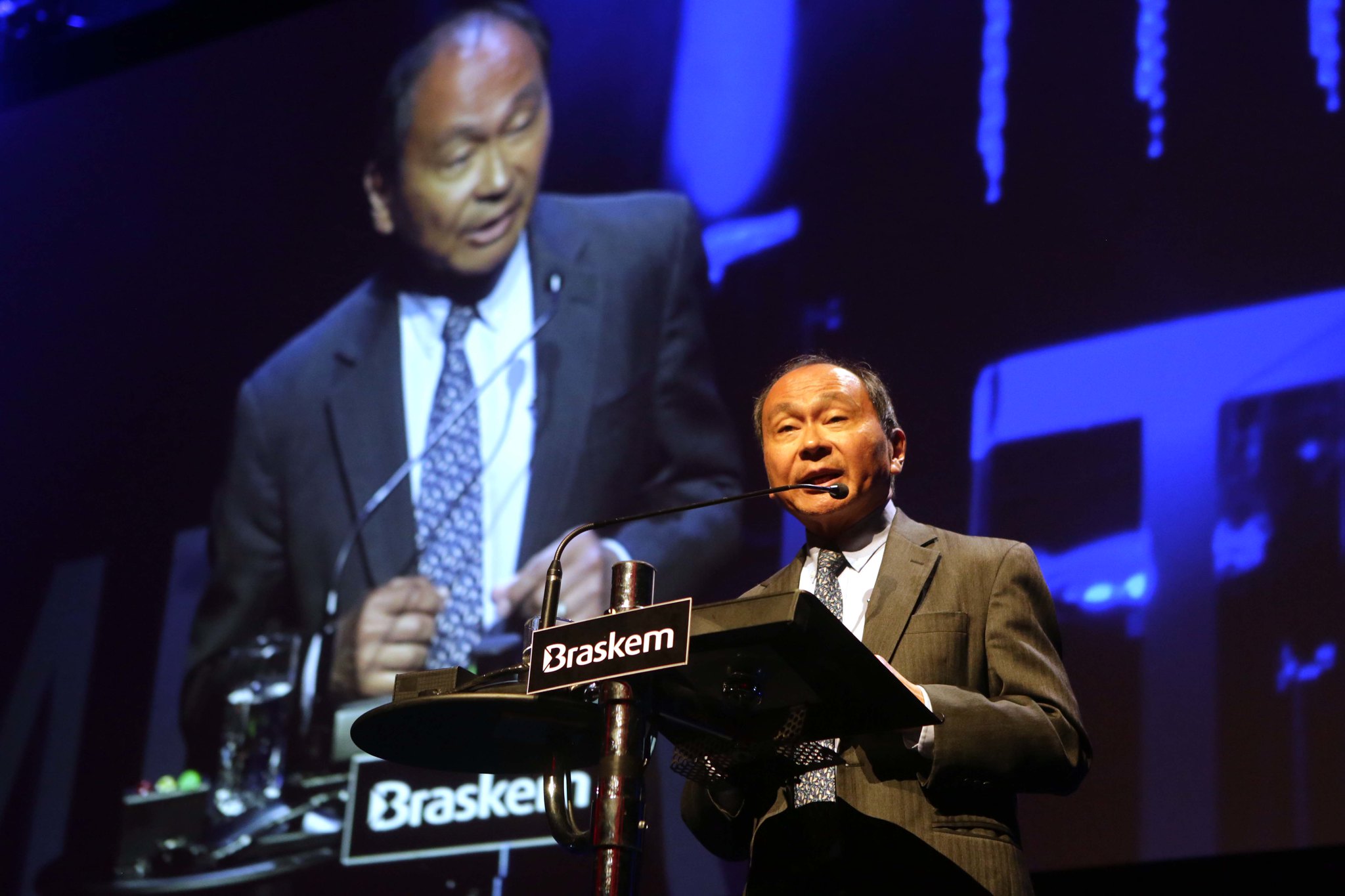
Francis Fukuyama in 2016. (Fronteiras do Pensamento, Flickr, CC BY-SA 2.0)

By Scott Ritter
Special to Consortium News
“What we are witnessing is not just the end of the Cold War, or a passing of a particular period of postwar history, but the end of history as such: that is, the end point of mankind’s ideological evolution and the universalization of Western liberal democracy as the final form of human government.”

These words, written by the American political scientist Francis Fukuyama, who in 1989 published “The End of History,” an article that turned the academic world upside down.

“Liberal democracy,” Fukuyama wrote, “replaces the irrational desire to be recognized as greater than others with a rational desire to be recognized as equal.”

“A world made up of liberal democracies, then, should have much less incentive for war, since all nations would reciprocally recognize one another’s legitimacy. And indeed, there is substantial empirical evidence from the past couple of hundred years that liberal democracies do not behave imperialistically toward one another, even if they are perfectly capable of going to war with states that are not democracies and do not share their fundamental values. “

But there was a catch. Fukuyama went on to note that, 

“[N]ationalism is currently on the rise in regions like Eastern Europe and the Soviet Union where peoples have long been denied their national identities, and yet within the world’s oldest and most secure nationalities, nationalism is undergoing a process of change. The demand for national recognition in Western Europe has been domesticated and made compatible with universal recognition, much like religion three or four centuries before.”

Global Model 

This growing nationalism was the poison pill to Fukuyama’s thesis regarding the primacy of liberal democracy. The foundational premise of the then-burgeoning neoconservative philosophical construct of a “new American century” was that liberal democracy, as practiced by the United States and, to a lesser extent, Western Europe, would become the model upon which the world would be rebuilt, under American leadership, in the post-Cold War era. 

These paragons of the twisted confluence of capitalism and neoliberalism would have done well to reflect on the words of their arch-nemesis, Karl Marx, who famously observed that,

“Men make their own history, but they do not make it as they please; they do not make it under self-selected circumstances, but under circumstances existing already, given and transmitted from the past. The tradition of all dead generations weighs like a nightmare on the brains of the living.”
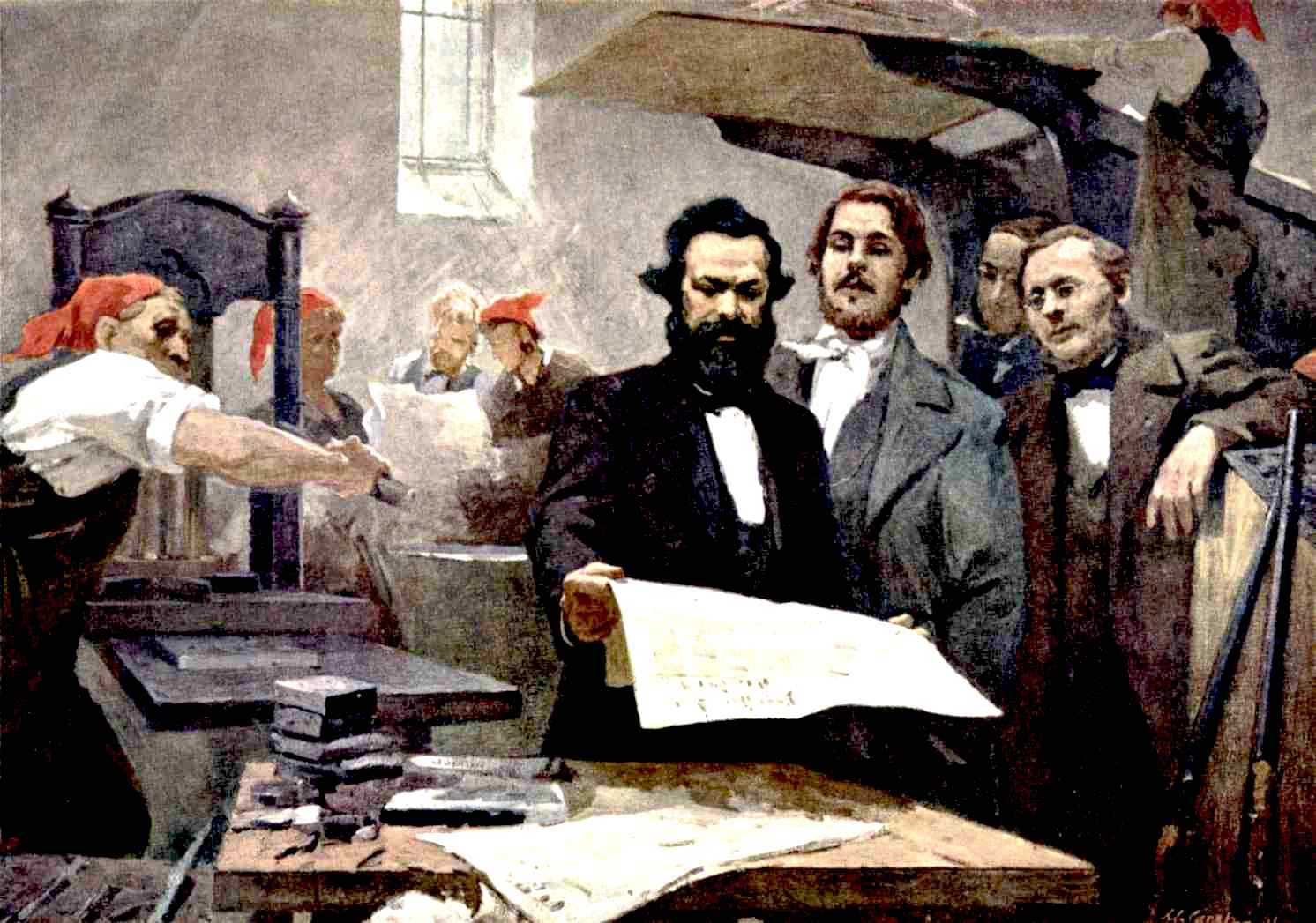
E. Capiro’s 1895 oil painting of Karl Marx and Friedrich Engels in the printing house of their German daily Neue Rheinische Zeitung, published in Cologne at the time of the Revolution of 1848-1849. (Wikimedia Commons, Public domain)

History, it seems, can never end, but rather is reincarnated, over and over, from a foundation of history influenced by the actions of the past, infected as they are with the mistakes that are derived from the human condition.

One of the mistakes made by Fukuyama and the proponents of liberal democracy, who embraced his “end of history” ideal in reaching their conclusion, is that the key to historical progression lies not in the future, which has yet to be written, but in the past, which serves as the foundation upon which everything is built.

Historical foundations run deep — deeper than the memories of most academics. There are lessons of the past that reside in the soul of those most impacted by events, both those recorded in writing and those passed down orally from generation to generation. 

Academics such as Fukuyama study the present time, drawing conclusions based upon a shallow understanding of the complexities of times past. 

According to Fukuyama, history ended with the conclusion of the Cold War, perceived as a decisive victory of the liberal democratic order over its ideological opponent, world communism. 

But what if the collapse of the Soviet Union — the event seen by most historians as signaling the end of the Cold War — wasn’t triggered by the manifestation of the victory over communism by liberal democracy, but rather by the weight of history defined by the consequences of prior “end of history” moments? What if the sins of the fathers were transferred to the progeny of previous historical failures? 

War & Revived Nationalism 

Of the many points of conflict occurring in the world today, one stands out as a manifestation of the ongoing fascination liberal democracy adherents have with the victory over communism, which they thought was won more than three decades ago, namely, the ongoing conflict between Russia and Ukraine.

Political scientists in the Fukuyama “end of history” school view this  conflict as being derived by the resistance of the remnants of Soviet regional hegemony (i.e., modern-day Russia, led by its president, Vladimir Putin) over the inevitability of liberal democracy taking hold.

But a closer examination of the Russian-Ukraine conflict points to the present conflicts being born of not simply the incomplete divorce of Ukraine from the Soviet/Russian orbit that occurred at the end of the Cold War, but also the detritus from the collapse of previous ruling systems, especially the Tsarist Russian and Austro-Hungarian Empires.
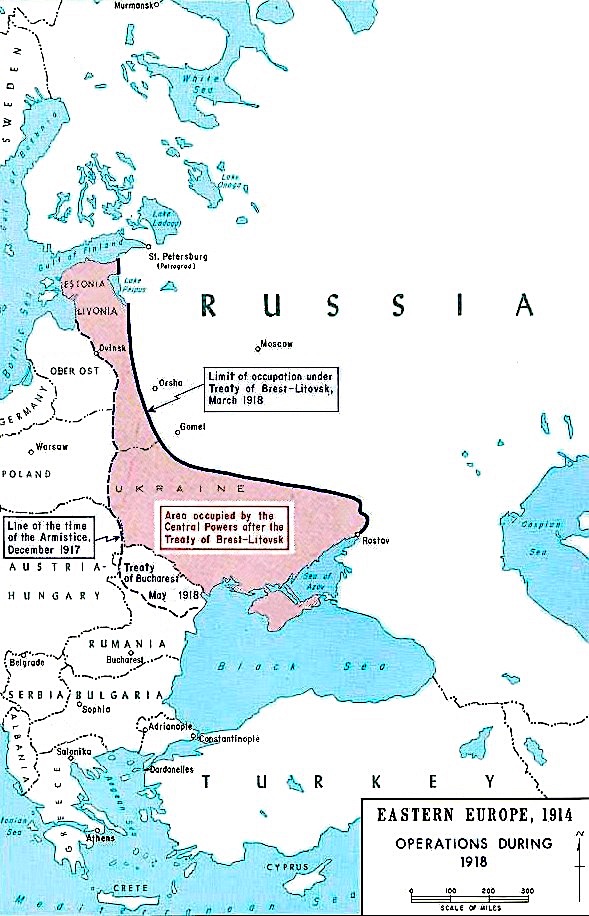
Treaty of Brest-Litovsk map showing territory lost by Bolshevik Russia in 1918. (Department of History, U.S. Military Academy, Public domain)

Indeed, the current conflict in Ukraine has nothing to do with any modern-day manifestation of the Cold War bipolarity, and everything to do with the resurrection of national identities which existed, however imperfectly, centuries before the Cold War even began.

To understand the roots of the Ukrainian-Russian conflict, one needs to study  German actions after the 1918 Treaty of Brest-Litovsk, the rise and fall of Symon Petliura and the Polish-Soviet War — all of which predated the Molotov-Ribbentrop Pact and the dissection of Galicia that took place in 1939 and 1945. 

These actions were all triggered by the collapse of Tsarist and Austro-Hungarian power, and then united by violent efforts to allow local realities to shape the final disposition of a region frozen in place by the rise of Soviet power.

The dislocation felt by many Ukrainians today from all things Russian can be traced to the failed attempt at forming a nascent Ukrainian nation in the chaotic aftermath of the First World War and the collapse of both Tsarist Russia and the Austro-Hungarian Empire – all prior to the consolidation of both Polish and Bolshevik power.

The Brief Rise and Fall of a Ukrainian State, 1918-1921

The Ukrainian People’s Republic, led by the nationalist Symon Petliura, proclaimed its independence from Russia in January 1918. It did so backed the German army, which occupied the Republic after the Central Powers, led by Germany, signed the Brest-Litovsk Treaty with Ukraine in February 1918. (Russia and the Central Powers signed a separate Brest-Litovsk Treaty in March 1918).

The German military occupiers then dissolved the socialist, Ukrainian People’s Republic in April 1918, replacing it with the Ukrainian State, also known as the Second Hetmanate. (The First Hetmanate was a Ukrainian Cossack State that existed in the Zaporizhian region from 1648 until 1764).
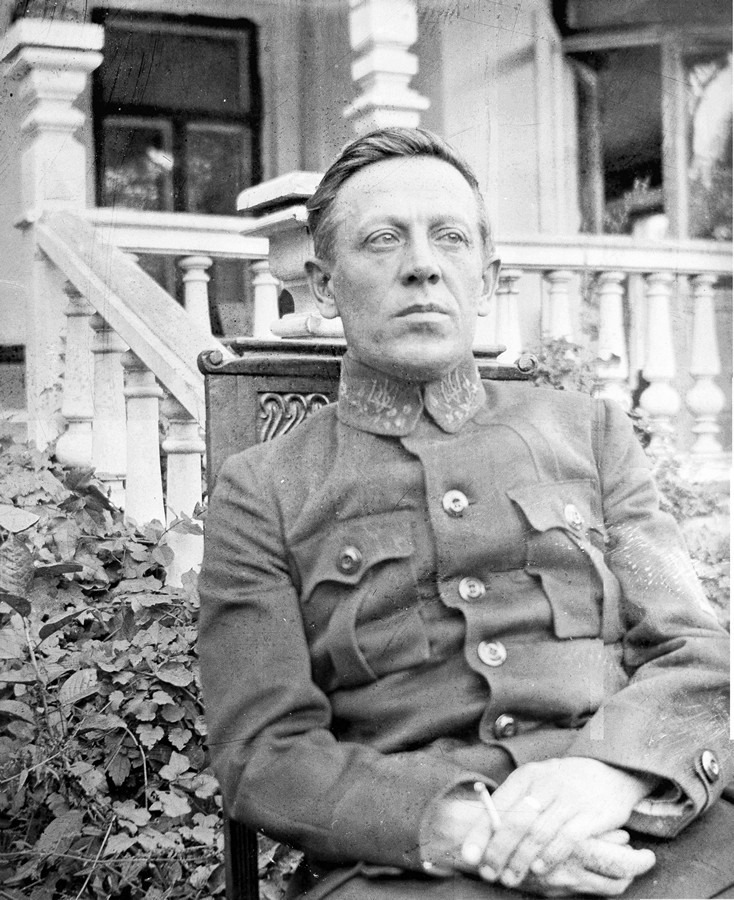
Symon Petliura (Wikipedia/Public Domain)

But the Ukrainian State survived only until December 1918, when forces loyal to the deposed Ukrainian People’s Republic, led by Petliura, overthrew the Second Hetmanate, and reclaimed control over Ukraine.

During this time the physical dimensions of the Ukrainian People’s Republic was in constant flux. In the short first tenure of the Ukrainian People’s Republic, two territories claimed as Ukrainian — centered round Odessa and Kharkov — declared their independence from the Ukrainian People’s Republic, and instead opted to join Russia [as four regions today have similarly opted to join Russia]. 

In November 1918 a portion of the Austro-Hungarian Empire’s Galician territories possessing a Ukrainian majority declared its independence, organized itself as the Western Ukrainian Republic, and in January 1919 merged with the Ukrainian People’s Republic.

But upon its creation, the Western Ukrainian Republic found itself at war with a newly independent Poland and, following the merger between the Western Ukrainian Republic and the Ukrainian People’s Republic, the war morphed into a general conflict between Poland and Ukraine.

One of the major battlegrounds of this conflict was the western Galician territory of Volhynia. It was here that Ukrainian troops undertook the slaughter of thousands of Jews, for which Petliura has been blamed.

End of Ukrainian Republic

The Polish-Ukrainian war ended in December 1919 with the defeat of the Ukrainian People’s Republic. One of the major reasons for this defeat was the rise of Soviet power as the Russian Civil War reached its violent conclusions in the territories abutting the Ukrainian People’s Republic, allowing the victorious Red Army to turn its attention to consolidating Bolshevik authority over the territory of Ukraine.

This led to a peace treaty between the Ukrainian People’s Republic and Poland which saw the territories of the former Western Ukrainian Republic turned over to Poland in exchange for Polish assistance against the Bolsheviks.

The alliance between Poland and the Ukrainian People’s Republic, concluded in April 1919, led to a Polish offensive against the Soviet Union which ended with the capture of Kiev by Polish troops in May 1919. A Soviet counterattack in June took the Red Army to the gates of Warsaw, only to be thrown back in August by Polish forces, which began to advance eastward until the Soviets sued for peace, in October 1920.

While various efforts to end the Polish-Soviet conflict had been brokered on the basis of a delineation of territory known as the Curzon Line, named after the British Lord who first proposed it back in 1919, the final demarcation of the border was negotiated via the Treaty of Riga, signed in March 1921, which formally ended the Polish-Soviet war.

The so-called “Riga Line” had Poland taking control of large amounts of territory well east of the Curzon Line, leading to longstanding resentment by Soviet authorities.

The Treaty of Riga imposed boundaries on a region with no regard to the ethnic composition of the people living there, leading to a mixing of populations that were inherently hostile toward one another.

The end of the Western Ukrainian Republic, in 1919, led to the political leadership of that entity going into diaspora in Europe, where they pressed the governments of Europe to recognize the independent status of the Western Ukrainian nation.

Rise of Bandera
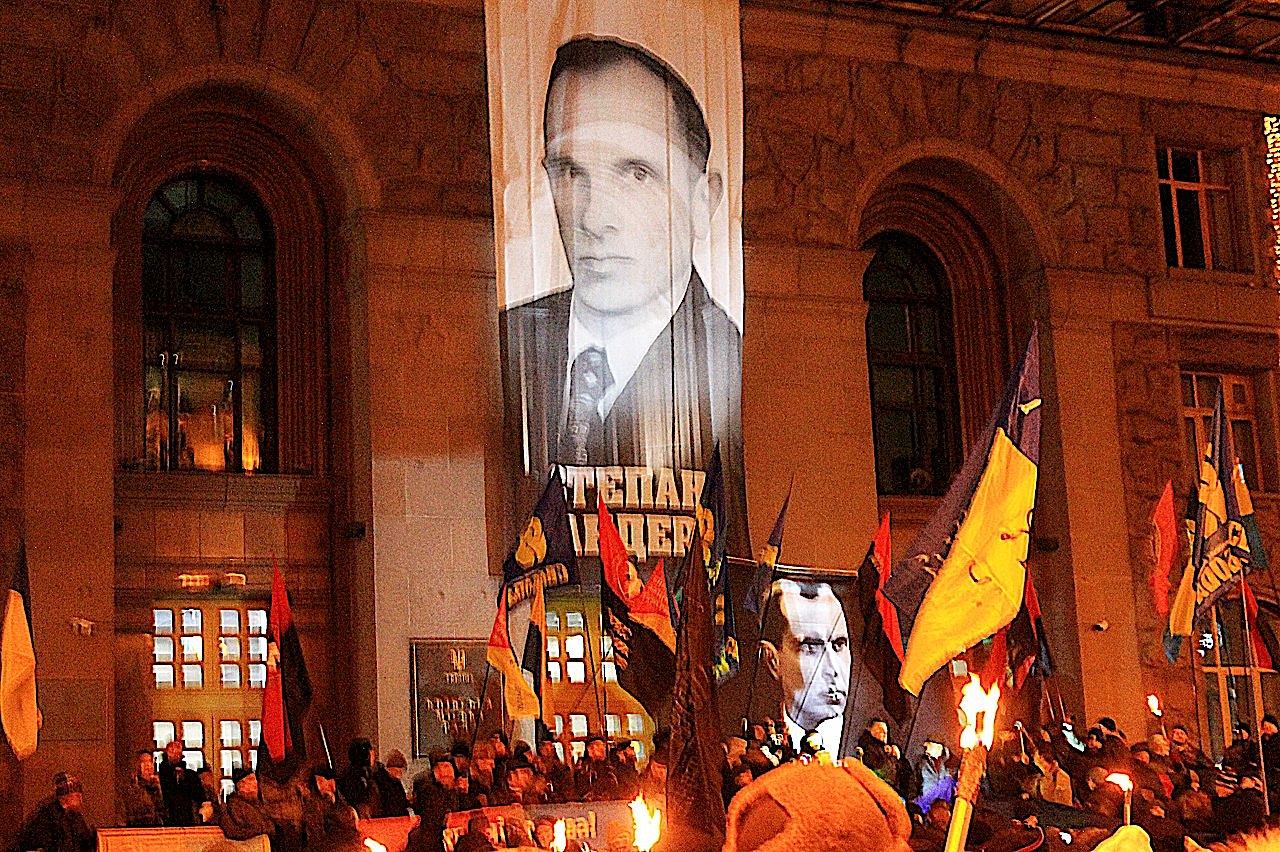
Stepan Bandera torchlight parade in Kiev, Jan. 1, 2020. (A1/Wikimedia Commons)

This diaspora worked closely with disaffected Ukrainian nationalists who found themselves under Polish governance in the aftermath of the Polish-Soviet war. Among these Ukrainian nationalists was Stepan Bandera, an adherent of Symon Petliura (assassinated in exile in Paris in 1926 by Jewish anarchist Sholom Schwartzbard who said he was avenging the deaths of 50,000 Jews. Schwartzbard was acquitted.)

Bandera rose to lead the Ukrainian nationalist movement in the 1930’s, eventually allying himself with Nazi Germany following the 1939 partitioning of Poland between Germany and the Soviet Union, which ran roughly along the Curzon Line demarcation.

Bandera was the driving force behind Ukrainian nationalist forces operating alongside the German occupying forces after the German invasion of the Soviet Union in June 1941. These forces participated in the massacre of Jews in Lvov and Kiev (Babyn Yar) and the slaughter of Poles in Volhynia in 1943-44.

When the Soviet Union and the western allies defeated Germany, the Curzon Line was used to demarcate the border between Poland and Soviet Ukraine, putting the western Ukrainian territories under Soviet control.
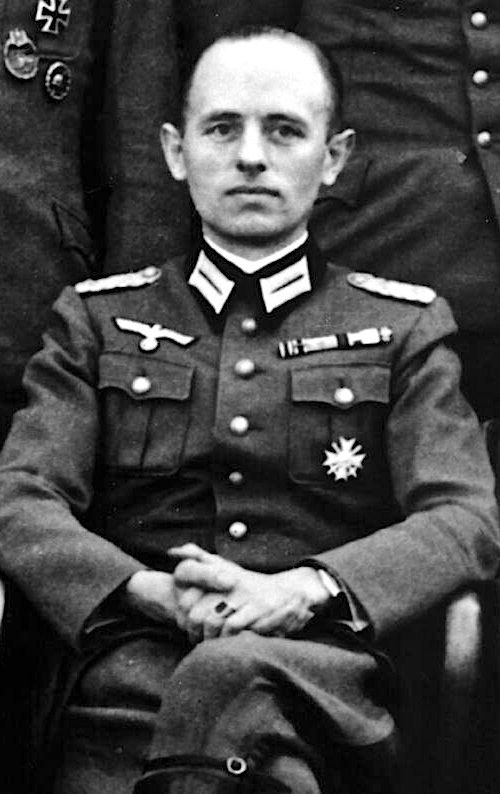
Reinhard Gehlen (Bundesarchiv/Wikimedia Commons)

Bandera and hundreds of thousands of western Ukrainian nationalists fled to Germany in 1944, ahead of the advancing Red Army. Bandera continued to maintain contact with tens of thousands of Ukrainian nationalist fighters who remained behind, coordinating their actions as part of a resistance campaign managed by Reinhard Gehlen, a German intelligence officer who ran Foreign Armies East, the German intelligence effort against the Soviet Union.

After the surrender of Nazi Germany, in May 1945, Gehlen and his Foreign Armies East organization was subordinated to U.S. Army intelligence, where it was reorganized into what became the BND, or West German intelligence organization.

The Cold War began in 1947, following the announcement by U.S. President Harry Truman of the so-called Truman Doctrine, which aspired to stop the expansion of Soviet geopolitical expansion.

That same year, the newly created C.I.A. took over management of the Gehlen organization. From 1945 until 1954, the Gehlen organization, at the behest of U.S. and British intelligence, worked with Bandera and his Organization of Ukrainian Nationalists (OUN) to direct the efforts of the Banderist fighters who remained on Soviet territory.

They fought in a conflict that claimed the lives tens of thousands of Soviet Red Army and security personnel, along with hundreds of thousands of OUN and Ukrainian civilians. The C.I.A. continued to fund the OUN in diaspora up until 1990.

Link to Today

In 1991, the first year of Ukraine’s independence, the neo-fascist Social National Party, later Svoboda Party, was formed, tracing its provenance directly to Bandera. It had a street named after Bandera in Liviv, and tried to name the city’s airport after him. 

In 2010, pro-Western Ukrainian President Viktor Yushchenko declared Bandera a Hero of Ukraine, a status reversed by Ukrainian President Viktor Yanukovych, who was later overthrown. 

More than 50 monuments, busts and museums commemorating Bandera have been erected in Ukraine, two-thirds of which have been built since 2005, the year the pro-American Yuschenko was elected.

At the time of the 2014 overthrow of the elected Yanukovych, Western corporate media reported on the essential part the descendants of Petliura and Bandera played in the coup. 

As The New York Times reported, the neo-Nazi group, Right Sector, had the key role in the violent ouster of Yanukovych. The role of neo-fascist groups in the uprising and its influence on Ukrainian society was well reported by mainstream media outlets at the time.  

The BBC, the NYT, the Daily Telegraph and CNN all reported on Right Sector, C14 and other extremists’ role in the overthrow of Yanukovych.

Thus today’s Ukrainian nationalism draws a direct link to the history of extremist nationalists beginning with the post World War I-period.  

Where Does History Begin?

Almost every discussion about the historical roots of today’s Russian-Ukrainian conflict begins with the partition of Poland in 1939, and the subsequent demarcation that took place at the end of the Second World War, solidified by the advent of the Cold War.

However, anyone searching for a solution to the Russian-Ukrainian conflict that is grounded in post-Cold War policies will run afoul of the realities of history that pre-date the Cold War, and which continue to manifest in the present day by reincarnating still unresolved issues.

They all have a precedent that dates to the tumultuous period between 1918-1921.

The reality is that the collapse of the Tsarist and Austro-Hungarian empires had a far greater influence on the history of modern-day Ukraine than did the collapse of the Soviet Union.

History, it seems, will never end. It is folly to think so, with those embracing such a notion simply prolonging and promoting the nightmares of the past, which will forever haunt those who live in the present.

Scott Ritter is a former U.S. Marine Corps intelligence officer who served in the former Soviet Union implementing arms control treaties, in the Persian Gulf during Operation Desert Storm and in Iraq overseeing the disarmament of WMD. His most recent book is Disarmament in the Time of Perestroika, published by Clarity Press.

Thursday, August 24, 2023

"Conservatives and Communists of the World, Unite!" by Eric Walberg


Click here for Exit the Cuckoo's Nest's posting standards and aims. 

Click here to sign the People's Proclamation and send it to everyone you know.


Source: Dissident Voice

Conservatives and Communists of the World, Unite!

Review of The Cosmopolitan Empire

Cosmopolitan — ‘world politics’, ‘world citizen’ — people of many races under a world empire. The word became a meme in the 1890s as British empire blossomed, supposedly the world now united around principles of the free market. Sounds cool. The market is the proven way to run economies. It is neutral, no favorites, harsh but just, making us work hard, the state ensuring people don’t cheat and undermine the sacred system. For if belief in all this wavers, the loss of faith in the market would spell doom for all, equally. We are equal before the law, and we can vote. That’s what democracy and freedom are all about, right?

But is the apparent real?

Statistics suggest there’s much more to all this. Income distribution has never been more skewed, clearly the result of four decades of neoliberalism. We’ve never been closer to world war (except in 1914 and 1939). Weren’t countries merrily trading in ‘free markets’ supposed to be peaceful? Reason and logic fail us.

Peter Myers’ Cosmopolis is a collection of essays, available free at his website, which can be read independently, packed with quotes, reflecting on past conspiracies, critiquing the neoliberal plot for world hegemony today, its origins and its relation to Jewish, Freemason, Nazi, Bolshevik, capitalist ones. The main actors — Trotsky vs Stalin, HG Wells and Orwell, the pandemic, and the return of fascism/ Nazism as the conspirators push for their TINA moment in the Great Reset, culminating in the war in Ukraine.

The star is HG Wells, who proposed a World State which he also called ‘Cosmopolis’. His ‘Open Conspiracy’, the world movement for the supercession or enlargement or fusion of existing political, economic, and social institutions … a movement aiming at the establishment of a world directorate” (Wells, Open Conspiracy, 1933, p. 32-3.)

There are two main themes. The first centres around the role of Jews in the Russian revolution, how Stalin ‘stole’ ‘their’ evolution (Myers calls it ‘one of the great Denials of our time’1), and how that resulted in Israel and feminism-gay liberation as the new, post-Marx ‘revolution’. He shows that the new Cold War is between the atheistic, LGBT, ‘Trotskyoid’, ‘Cosmopolitan’ West, on the one hand, and a coalition of Christian Russia and Confucian China, both a hybrid socialist-capitalist authoritarian on the other.

Myers’ other main theme is linking all suspicious recent events — assassinations of JFK, RFK, and MLK, 9/11 + the anthrax letters, MH370, the World Economic Forum and the Great Reset — to deep state elite plans. The WEF ‘penetrates the cabinets’, ‘but for an unelected body to do so is undemocratic and subversive. It implies Oligarchic rule—for the greater good, of course, because most people are Deplorables. The Globalists are attempting to implement the World State advocated by HG Wells.’

Myers draws from dozens of sources, many of which he unearthed himself and with the help of his strategically located readers, from the New York Public Library to the grave site of Stalin’s mother in Georgia. Part of the fun in reading this very readable work is following his sleuthing.

His appendices including the smoking gun revelations of Morrow and Hunt on JFK are welcome reminders of how truly bizarre US politics is. They make the case of assassination as the CIA modus operandi for JFK, MLK, and RFK. Truman’s 1963 Oped to the New York Times calling for the CIA to be brought under control disappeared the moment it appeared. (Eisenhower made sure his message got out and stayed out by springing it on a nationally broadcast farewell speech in 1960.) RFK was killed for calling for an independent investigation of his brother’s death. Which brings us to the ultimate cloak and dagger, the blowing up of North stream. The CIA is alive and well and still out of control.

Promised lands

Myers, like Solzhenitsyn, is not afraid to analyze the role of Russian Jews in the Russian revolution from start to finish, with a short bumpy patch under Stalin. The details are fascinating. It’s finally time to access Soviet history through different lenses, and Myers is a good source for this. One tidbit: ‘Both Trotsky (Kronstadt, collectivization) and Stalin (gulags) lived by the sword and died by the sword.’ i.e. they were both assassinated.2

It struck me that Israel is actually a slicker version of the Russian revolution from Lenin to Putin: a cosmopolitan ideological state, originally socialistic but quickly devolved into authoritarian capitalism, governed by a European elite as a police state oppressing non-Jews. BUT with a ‘heppi end’ for the Jews both in Russia and Israel. All but one of the Russian oligarchs are Jewish.

Just stating this truth is heresy. The centrality of the Jewish tribe must be rigorously denied, a feat which we watch as laws are pushed even in the United Nations (and unwritten laws for media stamped in journalists’ minds), asserting that any criticism of the Jewish state is racism, despite clear practice that shows Israel is the font of racism. Orwell’s 1984 doublethink and newsspeak have a new playing field, where INGSOC (Orwell’s Britain) has devolved into the most loyal supporter of the new Oceania (US), and no one notices that the Grand Inquisitor is a Goldstein.

In the days of the British empire, before the state of Israel, it was easier for the goy empire of the day (Britain) to manoeuvre, as the elite Jews at the centre of that conspiracy had to behave. The Shaftsbury/ MacKinder idea of a Jewish colony in the Middle East was there by the mid-19th century, but when it materialized in 1948, it had a new mother country and quickly started to play its own political games. Jews are nobody’s puppets. So the US-Israel empire is unwieldy and is wearing thin as Israel celebrates 75 years, its diamond jubilee. And moves to unite Sunni and Shia in a newly invigorated united front against Israel, with the US out of the picture, suggest that all the plandemics and wars might not be enough to put Humpty Dumpty together again.

Illuminati/ Freemason

Myers deals with the origins of today’s conspiracy, giving a central role to the Illuminati and Freemasons. I’m not convinced that there is more than an just an element of nostalgia in those who identify with these secretive groups. The Tempest, Midsummer Night’s Dream, Winter’s Tale are based on Masonic legends. Mozart’s Magic Flute has clear Illuminist influence. Goethe was a member of the Illuminati. Myers traces Freemason imagery, poses and beliefs as continuous through the post-enlightenment period. The hand-hiding pose traces back to classical times – Aeschines, founder of a rhetoric school, suggested that speaking with an arm outside one’s chiton was bad manners. The pose was used in 18th-century British portraiture as a sign that the sitter was from the upper class.

But there are definitely two versions of today’s conspiracy. Myers sees the Illuminati as more globalist (rule by the United Nations, UN Committees and International courts) as opposed to a more hegemonic nationalist rule by the UK/US/Israel. Jews, the most internationalist/cosmopolitan and yet ‘the most nationalist (chauvinist, self-absorbed) of peoples, are riven by the oscillation between Akhenaten’s Universal God and Jehovah the Tribal God.’

Elite Jews are behind the conspiracies today, though a small minority of ‘good’ Jews reject this secular Judaism-Zionism and work with non-Jews to unite as opponents to this corporate globalization, either nice Wellsian or chauvinist. Such as Jeffrey Sachs, who condemns US imperial policy today, having participated in the post-collapse Russian reforms which almost cemented post-Soviet Russia into the US-led conspiracy. Sachs and Putin ended up on much the same page three decades later, both essentially fighting the post-pandemic push by the globalists.

Marx was not a Freemason nor were Lenin, Trotsky, etc. Stalin, Hitler, Franco banned it as do all dictators. The most authoritative text, Manly Hall, Lost Keys of Freemasonry, 1923, is anodyne, admirable, no hint of anything nefarious, just another ‘path to enlightenment’. Freemasony operate(d) as a secret society but never very secret (unless outlawed) as it became fashionable in the 18th century. It was openly behind both the American and French revolutions (though not the Russian). Now it is more or less completely open. It has evolved over time as capitalism developed and made use of the Freemasons as a governing force of educated bourgeois.

Freemasonry serves imperialism though it is either unaware of this or accepts imperialism as the way to a universal society, the ancient dream, the Tower of Babel in reverse, as sincere striving rather than hubris. Hall’s thought stops with bourgeois society, though he explains the pomp of mystic self-striving which ‘true’ Masons pursue as part of their 33-level initiation.

Myers chides RFK Jr for not pointing to Masonic handshakes by Fauci and others, but are they just colourful flourishes, hiding the real deep state? Most Masons are just nice science-oriented, educated middle class men and women. Though Freemasonry might have sparked the French revolution, it didn’t come to power as a disciplined elite, and it was not a factor in the conspiratorial organization that brought the Bolsheviks to power. Freemasonry did not re-emerge in the former Soviet Union until after the breakup of Soviet dominance in Eastern Europe.

Vladimir Antyufeyev, deputy prime minister of the self-proclaimed Donetsk People’s Republic blamed the ongoing conflict on US and European Masons. If in fact all European leaders are Freemasons and the US has Freemasonry built into its revolution, then Antyufeyev is right. Putin also attacked ‘Masonic’ competitors (at 15 minute spot) and warned that Russia has always ‘caught up with them in strategic weapons’.

An appeal online by Andrey Bogdanov, Great Master Of The Grand Lodge Of Russia, addressing the war in Ukraine, suggests the role of Freemasonry is not a serious lethal conspiracy: ‘For a real Freemason, no matter how complex the outside world is, a sense of inner harmony, fraternal communication and continuity of the chain of communication of Masonic knowledge are the prevailing aspects of its existence. Everything passes and only brotherhood seems eternal to us.’

New morality: anything goes

It is interesting that both ‘Marx and Engels saw the bourgeois family as a farce, oppressing women and predicted communal child-rearing but traditional forms of living, as did HG Wells. ‘ Yet all had traditional families. Rousseau, author of Emile, on free child-rearing, place all five of his children in an orphanage at birth.’ My takeaway: Intellectuals make poor rulers, always theorizing, conflicting and/or totalitarian.

Myers shows how important the Stalin-Trotsky war-within-the-revolution is to understanding our current cultural wars. ‘Trotskyists did not learn from the Soviet Union’s experience, because they deemed Stalinism a ‘betrayal’ of True Communism. Instead, they are bringing the Culture War — begun by Old Bolshevism — to the West; but, as David Horowitz noted, in the West it is called ‘Feminism’ rather than ‘Marxism’. … Whereas Hitler’s supporters are in jail for Holocaust Denial, and most of Stalin’s supporters in the West disappeared after 1991, Trotsky’s heirs and supporters are entrenched in Academia, university campuses, Foundations, the Media, the Public Service, and the JudiciaryThey have dominated university campuses for decades. They regularly march in city centres—marches organised by Socialist Alliance, Socialist Alternative, or other Trotskyist sects. Green Left Weekly is a mainly Trotskyist newspaper.’

You must read the details yourself. The ‘revolution’ snuck in the back door.

And now we arrive at the Globalists, the ‘collective West’ elites, the new Oceania, having rewritten 20th c history as a benevolent empire that crushed fascism and communism (i.e., Stalinism), with no mention of the role of Judaism, though it was behind both, as Svengali for the Nazis and as shapers of communism in the latter.

‘The anti-Stalin ‘Trotskyoid’ Left, which Stalin defeated in Russia, has consolidated in the West and largely overthrown the Christian order via the so-called Culture War,’ which is already creating a centre of opposition that brings left and right together. ‘Putin, meanwhile, has re-established Christianity in Russia. The new Cold War is between the atheistic, LGBT, ‘Trotskyoid’, ‘Cosmopolitan’ West, on the one hand, and a coalition of Christian-socialist Russia and Confucian-Stalinist China on the other.’ Which is now attracting the evangelical right in the US, creating fissures in any conspiratorial attempt at a ‘Great Reset’.

Where is the East in all this? Myers points out that ‘Knowledge and ideas spread both ways across the Silk Road, from around 2000BC. Heraclitus’ philosophy is similar to Taoism, and he too took to the hills.’ Eastern thinking culminated in Plato. Marx dismissed ‘oriental despotism’ but Schopenhauer built his philosophy around Buddhism and despised socialist notions of elevating the working class as a historical actor. He quips in The World as Will and Representation that he would prefer to be ruled by a lion than one of his fellow rats. So were the nonentities that followed Stalin rats? They certainly weren’t lions. And the workers’ state collapsed in an awful hurry, with rats fleeing the sinking ship in droves when the hatch opened.

As for totalitarianism, Plato was the first to promote it, though he insisted his republic would only work for a community of 5,000. We shouldn’t blame Plato. ‘When Russian emigrants went to Palestine and established the state of Israel there, they brought with them both socialism (the kibbutzes being a benign kind) and the totalitarianism disclosed by Israel Shahak.3 Their treatment of the Palestinians and of their neighbours bears comparison with Soviet precedents. As for the ‘Open Society’, could there be anything more ‘Closed’ than the Jewish Bible’s mindset in its depiction of Goyim/the Nations?’

It is important to have reliable sources when dealing with Jewish issues. This work by Myers and his online library are essential tools to recognize the Jewish origins of today’s world.

Prescriptions

‘There IS a need for Environmental Limits, but the One Worlders are using this as an excuse to push World Government. The Trotskyist/HG Wells version of Communism is alive and well. ‘Open-border immigration, casual relationships treated as equivalent to marriage, We did not recognise it as Communist simply because we identified Stalin’s modifications as Communism. The Marxist Cultural Revolution, begun in the West in the late 1960s, has taken the West down the path pioneered by the early USSR. … To treat “relationships” as the equivalent of marriage is, in effect, to abolish marriage.’

‘As social breakdown proceeds, desperation will force us back to the essentials of life. We’ll be looking for ways to re-establish family ties, and the bonds between men and women.’ Myers takes many blinkers off leftists’ eyes (including mine). Even John Lennon’s Imagine: ‘no borders and no religion too.’ Many of us were smitten by the promise of 1917, which somehow morphed into a backdoor revolution of sex and drugs.

Myers has his finger in the dyke to stem the flood of book burning and newspeak today: History had already been rewritten, but fragments of the literature of the past survived here and there, imperfectly censored, and so long as one retained one’s knowledge of Oldspeak it was possible to read them. … A great deal of the literature of the past was, indeed, already being transformed. (1984 p. 250) As Myers points out it is the Trotskyoids of today that are the Thought Police for this brainwashing.

Is there any hope for ‘a less-severe Managerial State one day, not burdened by this Jewish bitterness or, equally, by a ‘white separatist’ prejudice’? China’s long tradition of state bureaucracy without full-blown slavery suggests itself as a tradition worth building on today, though contemporary China’s 996 policy4, and the plight of Tibetans, Uighurs and no doubt others, suggest capitalism erases even the most honoured traditions. Egypt and Babylon were successful state bureaucratic formations which were admired by Herodotus. It’s only biblical lore that paints a (self-serving) narrative dissing those civilizations.

Myers’ chapter on the covid plandemic documents how the Trotskyists in Australia sided with the conspiracy, denouncing anti-vaxxers as fascists. He could add the remnant of the communist parties too, which have all gone down the trans/gay road and meekly promoted the pro-vax plan. Even Cuba. The future opposition to the Wellsian world government is taking shape now, centred on Russia and China and their growing trade bloc with the third world (85% of the world population).

Wells is still the inspiration behind the one-worlders today, complete with his recommendation of an end to war and instead to deindustrialize in the interests of preserving the planet. ‘Wells presents a strong case for World Government, and it is a matter we should be discussing openly and (I believe) agonizing over, because we are in a Catch-22 situation. The threats are real, but the outcome could be Tyranny and the End of Civilization.’

‘Was George Orwell wrong when he depicted the coming tyranny as a Left-wing one?’ Left and right have lost their meaning. Genuine conservatives and genuine Marxist socialists have much common ground in opposing the liberal, now neoliberal Great Reset behind the plandemic and the cementing of a Wellsian globalism but under US-Israel.

*****

Afterthought:

The world had its moment of a global civilization. It started in 1917 and embraced the world by 1945 but collapsed when the US launched the Cold War. It was a proto-socialism, which the ‘collective West’ tolerated long enough to let the Communists beat Hitler. In the 1930s, it was implanted in the minds of anyone who took the time to consider it. Even the western media seemed to be on board as the fascist rivals prepared to destroy (the idea of) Communism.

Communism was the 19th century answer to industrial society, but Stalin made it a nonstarter for the ‘collective West’. Reading all this and the complicity of western media in giving Stalin’s regime lots of slack during the 1930s (Ukraine famine, mass arrests, slave labour), I’m reminded of my own ‘sov-symp’ Soviet sympathies, even today, with all the filth and horror exposed. It was never just a ‘managerial’ bureaucratic society. It was and will remain a stirring symbol of defiance of capitalism, banker-capitalist control, war as a plaything for weapons producers and cynical imperialist governments.

And it is Stalinism that retains the stamp of authenticity. The 1920s NEP mixed market was only a way station, and Khrushchev’s Thaw was really just living off the fruits of Stalinism; but without the ideological backbone, it slowly, then quickly collapsed. That spark/ flame  in history is now the stuff of legend, still inspiring Africa and Asia for help in liberating themselves in the 1960s. When Russia needed them, they held out their hands.

Yes, Cuba and a few others survive, fiercely attacked by imperialism, but none of them would have existed without the Soviet Union, and none have found a magic key to leave its legacy – good and bad — behind. It still looms as the conscience of the world cosmopolis. It included villains but many more heroes and many happy, if exasperated campers. And inspired the best music of the century (Shostakovich, Prokofiev), the best athletes (hockey, figure skating legends). They proved socialism could work, even under excruciating conditions. Russians are right to mourn its demise. I will die a sovsymp.

  1. Unattributed quotes are from Myers’ book. Attributed quotes are all from Myers’ research and are taken from his book. For more information contact Peter at https://mailstar.net/ For those interested in a hard copy, contact Meyers at his website.
  2. An unpublished autopsy report revealed stomach hemorrhaging, a sign of rat poison. Also The Death of Stalin: a Coup d’Etat (Myers, 2002/ 2018).

    My take on Stalin’s demise: it was Beria. And the others ganged up and used him as a fall guy, conveniently dead. Interesting, Beria was the smart KGB humanist who died leaving the muddlers. Fast forward to Andropov the smart KGB humanist who died leaving the muddlers. The ghost of Beria. but Beria was a pervert and the perfect fall guy.

  3. The Israeli Professor and dissident Israel Shahak repeatedly says in Jewish History, Jewish Religion: The Weight of Three Thousand Years (1994) that Judaism has a totalitarian streak (on p. 10, 15, 16, 18, 19, 102, and 103).
  4. Workweek 9am to 9pm 6 days.

Disqus