Showing posts with label poetry. Show all posts

Friday, June 30, 2023

"Sea Monsters Threaten the World With Their Tridents" by Edward Curtin


Click here for Exit the Cuckoo's Nest's posting standards and aims. 

Click here to sign the People's Proclamation and send it to everyone you know.


Source: Edward Curtin

Sea Monsters Threaten the World With Their Tridents

Sometimes you wake up from a dream to realize it is telling you to pay close attention to the depth of its message, especially when it is linked to what you have been thinking about for days.  I have just come up from a dream in which I went down to the cellar of the house I grew up in because the basement light was on and the back cellar door had been opened by a mysterious man who stood outside.

I will spare you additional details or an interpretation, except to say that my daytime thoughts concerned the media spectacle surrounding the Titan submersible that imploded two miles down in the ocean’s cellar while trying to give its passengers a view of the wreck of the Titanic, the “unsinkable” ship nicknamed “the Millionaire’s Special.”  The ship that no one could sink except an ice cube in the drink that swallowed it.

Cellar dreams are well-known as the place where we as individuals and societies can face the flickering shadows that we refuse to face in conscious life.  Carl Jung called it “the shadow.”  Such shadows, when unacknowledged and repressed, have a tendency to autonomously surface and erupt, not only leading to personal self-destruction but that of whole societies.  History is replete with examples.  My dream’s mysterious stranger had lit my way through some dark thoughts and opened the door to a possible escape.  He got me thinking about what all of us tend to want to deny or avoid because its implications are so monstrous.

The obsession with the alleged marvels of technology together with naming them after ancient Greek and Roman gods are fixations of elite technologues who have lost what Spengler called “living inner religiousness” but wish to show they know the classical names even though they miss the meaning of these myths.  Such myths tell the stories of things that never happened but always are.  Appropriating the ancient names without irony – such as naming a boat Titanic or a submersible Titan – unveils the hubristic ignorance of people who have never descended to the underworld to learn its lessons.  Relinquishing  their sense of god-like power doesn’t occur to them, nor does the shadow side of their Faustian dreams.

They will never name some machine Nemesis, for that would expose the fact that they have exceeded the eternal limits with their maniacal technological extremism, and, to paraphrase Camus, dark Furies will swoop down to destroy them.

Nietzsche termed the result nihilism.  Once people have killed God, machines are a handy replacement in societies that worship the illusion of technique and are scared to death of death and the machines that they invented to administer it.

The latter is not a matter fit to print since it must remain in the dark basement of the public’s consciousness.  If it were publicized, the game of nihilistic death-dealing would be exposed.  Because power, money, and technology are the ruling deities today, the mass media revolve around publicizing their marvels in spectacular fashion, and when “accidents” occur, they never point out the myth of the machines, or what Lewis Mumford called “The Pentagon of Power.”  Tragedies occur, they tell us, but they are minor by-products of the marvels of technology.

But if these media would take us down to see the truth beneath the oceans’ surfaces, we would see not false monsters such as the Titanic or Moby Dick or cartoon fictions such as Disney’s Monstro the whale, but the handiwork of thousands of mad Captain Ahabs who have attached the technologues “greatest” invention – nuclear weapons – to nuclear-powered ballistic submarines.

Trident submarines. First strike submarines, such as the USS Ohio.

These Trident subs live and breathe in the cellars of our minds where few dare descend.  They are controlled by jackals in Washington and the Pentagon with polished faces in well-appointed offices with coffee machines and tasty snacks.  Madmen.  They hum through the deep waters ready to strike and destroy the world.  Few hear them, almost none see them, most prefer not to know of them.

But wait, what’s the buzz, tell me what’s happening: the Titan and the Titanic, wealthy voyeurs intent on getting a glance into the sepulchre of those long dead, while six hundred or so desperate migrants drown in the Mediterranean sea from which the ancient gods were born.  These are the priorities of a society that worships the wealthy; a society of the spectacle that entertains and distracts while the end of the world cruises below consciousness.

The United States alone has fourteen such submarines armed with Trident missiles constantly prowling the ocean depths, while the British have four.  Named for the three-pronged weapon of the Greek and Roman sea gods, Poseidon and Neptune respectively, these submarine-launched ballistic missiles, manufactured by Lockheed Martin (“We deliver innovative solutions to the world’s toughest challenges”), can destroy the world in a flash. Destroy it many times over. A final solution.

While the United States has abrogated all treaties that offered some protection from their use and has declared their right of first use, it has consistently pushed toward a nuclear confrontation with Russia and China.  Today – 2023 June – we stand on the precipice of nuclear annihilation as never before.

A single Trident submarine has 20 Trident missiles, each carrying 12 independently targeted warheads for a total of 240 warheads, with each warhead approximately 40 times more destructive than the Hiroshima bomb.  Fourteen submarines times 240 equals 3,360 nuclear warheads times 40 equals 134,400 Hiroshimas.  Such are the lessons of mathematics in absurd times.

James W. Douglass, the author of the renown JFK and the Unspeakable and a longtime activist against the Tridents at Ground Zero Center for Non-Violent Action outside the Bangor Submarine Base in Washington state, put it this way in 2015 when asked about Robert Aldridge, the heroic Lockheed Trident missile designer who resigned his position in an act of conscience and became an inspirational force for the campaign against the Tridents and nuclear weapons:

Question: “What did the Nuremberg attorneys say about war crimes that had such a deep impact on Robert Aldridge?”

Douglass: “They said that first-strike weapons and weapons that directly target a civilian population were war crimes in violation of the Nuremberg principles. Those Nuremberg principles, which are the foundations of international law, are violated by both by electronic warfare – which is why we poured blood on the files for electronic warfare [at the base] – and also by the Trident missile system, which is what Robert Aldridge was building.”

Robert Aldridge saw his shadow side.  He went to the cellar of his darkest dreams. He refused to turn away.  He became an inspiration for James and Shelley Douglass and so many others.  He was a man in and of the system, who saw the truth of his complicity in radical evil and underwent a metanoia.  It is possible.

If those missiles are ever launched from the monsters that carry them through the hidden recesses of the world’s oceans, there will never be another Nuremberg Trial to judge the guilty, for the innocent and the guilty will all be dead.

We will have failed to shed light on our darkest shadows.

Writing in another context that pertains to today’s high-flying nuclear madmen whose mythic Greek forbear Icarus would not listen, the poet W. H. Auden put it this way in “Musée des Beaux Arts”:

About suffering they were never wrong,
The Old Masters: how well they understood
Its human position; how it takes place
While someone else is eating or opening a window or just walking dully along

How, when the aged are reverently, passionately waiting
For the miraculous birth, there always must be
Children who did not specially want it to happen, skating
On a pond at the edge of the wood:
They never forgot
That even the dreadful martyrdom must run its course
Anyhow in a corner, some untidy spot
Where the dogs go on with their doggy life and the torturer’s horse
Scratches its innocent behind on a tree.

In Brueghel’s Icarus, for instance: how everything turns away
Quite leisurely from the disaster; the ploughman may
Have heard the splash, the forsaken cry,
But for him it was not an important failure; the sun shone
As it had to on the white legs disappearing into the green
Water; and the expensive delicate ship that must have seen
Something amazing, a boy falling out of the sky
Had somewhere to get to and sailed calmly on.

We turn away at our peril.

Sunday, May 28, 2023

"Notes to Poetry: Or, defending freedom for the future" by Simon Elmer


Notes to Poetry: Or, defending freedom for the future

Simon Elmer

Der Zauberlehrling (1797) is the title of a famous ballad by Johann Wolfgang von Goethe, a re-telling of an ancient Egyptian myth that was later put to music by the French composer, Paul Dukas, in his orchestral scherzo L’Apprenti sorcier (1897). The latter was chosen for the title of a text published in 1938 by the French writer, critic and philosopher, Georges Bataille, who adopted it to describe a lineage to which he saw himself heir, and which comprised the poets, writers and artists who, in both their lives and their works, sought what he called ‘the totality of existence’. As the names that carry this lineage testify, such an existence can only be reached through a violent loss of self.

The Marquis de Sade was incarcerated by the French state for half his life; Francisco Goya was imprisoned by deafness for half of his; William Blake was dismissed by English society as a madman; Charles Baudelaire was prosecuted for his writings; Fyodor Dostoevsky was exiled to Siberia for his reading; Emily Brontë, Edgar Allan Poe, Isidore Ducasse and Arthur Rimbaud all lived brief lives of wild desperation; Friedrich Hölderlin, Gérard de Nerval, Friedrich Nietzsche, Vincent van Gogh and Antonin Artaud paid the ultimate price of their sanity. As a destiny, this is as far from the lures and rewards of art and literature as it is from the aims and influence of scientific or political practice.

In opposition to which, Bataille advocated a return to the world of myth, in whose cyclical time he saw the plenitude of a total existence beyond the linear time of history. As distinct from the man of science, who comprehends a world of objects abstracted from the totality of the real, the man of fiction, who creates a dream world in its place, and the man of action, who seeks to transform the world on the basis of this comprehension and in accordance with dreams that invariably become the nightmare of history, this is the sovereign attitude of what Bataille, in this text, called ‘The Sorcerer’s Apprentice’.

It was with these lines that, in January 2008, I announced the publication of The Sorcerer’s Apprentice, a monthly periodical which explored the relationship between poetry and community. The format of each issue varied: an anthology of texts on a single theme; a new translation or contextualisation of a work by a single author; an extended reflection on different aspects of community; or the preparation for an event in which the theme of community would be explored in practice.

These events typically took the form of a collective reading of texts, but also engaged in more complex activity we called ‘encounters’ — a walk through Epping or Ashdown forests, across Greater London, to the sites of Berlin Dada, around Greenwich Peninsula, in the terrain vague of the Thames Estuary, along various shores of the British Isles, to the Chateaux of the Marquis de Sade in the South of France, at exhibitions to which we had and hadn’t been invited, in pubs or simply at a house party convened for the occasion — all centred around these readings. In exploring the relationships these events brought into focus, this periodical aimed to be not only a site of reflection but itself an occasion for the formation of community.

Published monthly in slim booklets distributed to a small and limited number of sometimes reluctant readers, a wide readership was never their intention, and certainly not at the initiation of this project. Instead, the booklets, each of which included a short essay on their contents, were always understood as instrumental to the readings they were made to facilitate. There was almost no limit to where these readings were held, or who could participate in them, or what would determine their setting, other than that they engaged with the values of poetry. The basis to this practice was the belief — which the readings would explore and reaffirm — that poetry is a spoken art in which we best participate collectively, and that only in this way could its values be first discovered and then conjured back into the alienation and interiority of contemporary life. Well, perhaps not the only way, for most of us encountered or will encounter poetry for the first time as it is presented here, within the pages of a book, and read silently in our heads; and without that first, private and often overwhelming meeting with the ‘goddess’ we would not be able to pass from a silent to an audible reading, from listening with our inner ear to hearing the voices of ourselves and others in the vibrating air between us.

It was one of the aims and purposes of The Sorcerer’s Apprentice to encourage and enable as many people as possible to cross that line, and in doing so to join what I called, in issue no. 47, ‘The Community of Readers’. And in this respect, at least, it was successful. By the time the project came to an end in December 2014, it had produced 77 issues over seven series in as many years, and involved maybe a hundred readers in dozens of readings that have not ceased with its publication.

So why publish these Notes to Poetry now, nine years since the conclusion of this project? The answer is that, while these texts were written immediately after the Global Financial Crisis of 2008 and the decade of fiscal austerity and social uprising that followed, they didn’t anticipate the dark pit into which the West has fallen since March 2020. Now, more than ever, the values of poetry need remembering, defending and keeping alive through the new Dark Age we have entered.

In a New Normal in which we are told that our biological existence is a threat to others, our bonds of community are more crucial than ever. When woman is being erased in our laws and culture by the enforced orthodoxies of so-called ‘trans rights’, it has never been more important to recognise the unique inspiration of the goddess. When desire has been all but criminalised by ever more intrusive legislation into human relations, the origin of eroticism in the transgression of the law is a lesson we must remember. When every expenditure is counted in the balance of profit and loss, the economy of sacrifice can restore us to a morality of giving. When our bodies are the object of new technologies of biopower, the freedom of the dance reminds us of the corporeality of our being in the world. When our human rights are being removed on the justification of saving us from numerous manufactured crises, we must show courage and even joy in the face of death, rather than cower in fear before the risk of being human. When art and poetry have been reduced to entertainment, advertising and propaganda, recognising beauty in its increasingly brief appearances is more urgent than ever if the phenomenal world of our five senses isn’t to be entirely replaced by a digital and virtual reality. When our children are being trained to servitude and unquestioning obedience as the highest civic and political virtues, man’s unending quest for sovereignty must not be abandoned. When we are ruled by a combination of public displays of compliance and state terrorism, we must not be afraid to look into the night in wonder at a universe vaster than the rapidly shrinking world in which we are being imprisoned. And when our freedom of speech, expression, conscience and thought itself are being erased in both law and custom, poetry must reclaim its always contentious but pre-eminent role in asserting that freedom — as the French poet, André Breton, wrote a hundred years ago — is still the ‘colour of man’.

These are the primary, although by no means exhaustive, ‘Themes’ of poetry, which I discuss in the first section of this book, and to which I return and try to elucidate throughout these texts.

As for the ‘Readings’ themselves, which comprise the second section, there is no particular unity to their selection. They include the authors of the Gospels, William Shakespeare, John Donne, William Blake, Friedrich von Schiller, Ludwig van Beethoven, Novalis, John Clare, Lewis Carroll, Arthur Rimbaud, William Butler Yeats, Edward Thomas, Dada, Kurt Schwitters, Thomas Stearns Eliot, Robert Graves, Georges Bataille, Concrete Poetry, Ted Hughes, Seamus Heaney and Kate Tempest.

Some of these would meet Bataille’s definition of a ‘sorcerer’s apprentice’, but others clearly do not. Rather, they were selected either from what I was reading during these years or, drawing on past readings, what I had selected as capable of galvanising a collective reading. It was these readings that my ‘Notes to Poetry’ — the title of the second issue of The Sorcerer’s Apprentice — prefaced. Since they accompanied the read text, they are generally short, written to be read aloud prior to the commencement of the reading, and much of their concern was with contextualising the individual work or oeuvre of the poet or poets for those unfamiliar with their writing. They are, therefore, notes and not essays, and what insights they have are proposed rather than explored at length.

If I were to revive this project now, I would add other poets about whose work I would like to try writing, including San Juan de la Cruz, Johann Wolfgang von Goethe, Friedrich Hölderlin, Gérard de Nerval, Charles Baudelaire, Isidore Ducasse, Rainer Maria Rilke, André Breton, Bertolt Brecht, Federico García Lorca, Pablo Neruda and Arseny Tarkovsky — whose presence in The Sorcerer’s Apprentice was limited to my translations of individual poems and texts — as well as contemporary poets like Tony Harrison, Jorie Graham and Alice Oswald. Indeed, there is another volume of Notes to Poetry to be written about these authors.

Until I write it, however, and partly in order to bring my thoughts on the situation of poetry up to date with the world in which we live today, I have chosen to end this book with a new and more extended essay on the last of these poets, ‘An Open Letter to Nobody’. Since it is different not only in length and date of composition but also in its purpose, I have included this text not among the other ‘Readings’ but in the final section, ‘Manifestos’. These collect my occasional attempts, over the seven years of publication, to articulate both what I understand by poetry and its place in The Sorcerer’s Apprentice.

But what it this situation? In her 1968 book, Men in Dark Times, the German political theorist, Hannah Arendt, reflected on the ways in which philosophers, writers and poets had survived and continued to write while living under authoritarian and even totalitarian regimes, and her book is a series of portraits of both their lives and works.

That even in the darkest of times we have the right to expect some illumination, and that such illumination may well come less from theories and concepts than from the uncertain, flickering, and often weak light that some men and women, in their lives and their works, will kindle under almost all circumstances and shed over the time span that was given them on earth — this conviction is the inarticulate background against which these profiles were drawn.

Arendt’s examples — which included Rosa Luxemburg, Karl Jaspers, Walter Benjamin and Bertolt Brecht — were mostly drawn from those who lived through and in some instances died in the horrors that engulfed Europe in the first half of the Twentieth Century, and from which she herself had escaped to the USA. But her words have as much bearing on our own survival now, when a new form of totalitarianism is stretching out its digital fingers to enclose the entire globe in its grasp.

The profiles I have drawn in this book — which I have limited to the poets who did not constitute the only authors about which I wrote in The Sorcerer’s Apprentice — are offered not as a guide (for poetry’s power is never instrumental) but as a form of defence against the architects, financiers, administrators and commandants of this digital prison. It is increasingly clear that the primary target of the new totalitarianism is our children, who are being molded into a generation for whom freedom, human rights, democracy, community and even beauty no longer have any value — are, indeed, perceived as threats to their safety and that of the state.

Like the authors and publishers of the samizdat ‘self-publications’ that were circulated in the Eastern Bloc states between the 1950s and 1980s, my intention and hope in publishing this book, therefore, is that it will help to retain the values of poetry in a world in which poetry no longer has any accepted role, it would appear, other than creating the illusion of individual freedom within the mirrored cell of identity politics in which art and culture have been imprisoned today.

All the poems about which I write in this book contain some, many or all of these values, and my notes to them have no greater goal than to illuminate a space in which they can more clearly be read in the darkness of the present time, when the future of all art is in doubt. I do not claim that these values are universal, and the readings offered here are restricted to those authors and works in which I was and still am interested; but what is universal is the contempt in which these values are held today, and not only because of the threat they represent to our uniform adherence to the principles of biosecurity: surveillance, censorship and unquestioning obedience to the state, all of which have been uncritically adopted by our culture industry and most of its practitioners under the corporate-manufactured blanket of diversity, inclusivity and sustainability. Poetry, whose history is the never-ending struggle between freedom and power that today is experiencing one of its most crushing defeats, is a repository of these values. If we are to survive this nightmare of digital totalitarianism, state authoritarianism and corporate anarchism, these values must be defended from permanent erasure and kept alive for the future — if not in the books we are no longer permitted to publish or read then at least in our memories, in our hearts and in the hushed voices of our collective reading.

But it is not only a matter of survival. Our greatest weapon in the struggle against the enemies of humanity is the dystopian nature of the future they are constructing for us. Indeed, only a generation raised on a succession of manufactured civilisation-ending ‘crises’ could possibly view this dystopia as something desirable. It is up to those of us who remember a different past, therefore, and who are not cowered into obedience by the state terrorism of the present, to paint a more desirable and hopeful picture of our future. That means, among other things, defending the values of poetry against their erasure — not only from our present but also from our past.

As George Orwell prophetically saw, those who control the present control the past, and it is from the rewritten past that the future is being made to order today. When I wrote these Notes to Poetry, I never dreamed that I would live to see the texts of dead authors — even if, so far, it is mostly of children’s books — rewritten in accordance with the ideological dictates of the present.

On the trajectory of blind obedience we are taking, the works of many of the poets in this book will soon be censored or, worse, rewritten to comply with the new orthodoxies of thought and expression being enforced on Western society and culture. Under these orthodoxies, a dignified death is denied to those kept alive under even the most undignified of conditions; sacrifice is declared unsustainable in the dearth that apparently awaits us all; sovereignty has been recast as a servant of the state; the goddess of inspiration has been dismissed as a construct of patriarchy; the intoxication of dancing denounced as ableist by the self-elected priesthood of equity; any attempt to create community is now condemned as an attack on our diversity; beauty is no longer anything more than a form of discrimination; the realm of eroticism is policed as a site of potential crime; love is a duty we owe exclusively to an abstract humanity; woman is an empty cipher waiting to be defined by men; and poetry, for some time now, has been a two-way mirror onto this trans-human ideology.

In ‘The Apprentice Sorcerer’, which opened the second series of booklets in February 2009, I wrote:

Is it not indicative of just how far we have strayed from an existence worthy of our genius that the man who represents the model of modern citizenship — the aptly named ‘businessman’ — will happily relate the most contemptuous details of his business, and proudly exhibit, like some idiot child, the rewards for his servility; while another, in order to earn the eternal contempt of his peers, has only to confess an interest in, never mind a commitment to, those values of poetry, beauty and community without which human life is little more than the brawling of dogs for scraps from their master’s table?

Some fourteen years later, when the scraps have been reduced to a bowl of maggots, the brawling for them has never been so loud with threats, and our masters demand not just our obedient service but our willing compliance in the forging of our own chains, the values of poetry are more important, perhaps, than they have ever been. Amid the systematic cretinisation of the population by our education and culture industries and with it the impoverishment of our hopes for this world, there are, still, glimpses of beauty to be found, and nowhere more so than in our refusal to bow to what appears to be the inevitable. Poetry is both that refusal and the possibilities that can only be seen when we raise our eyes above this looking-glass world.

Simon Elmer, from the preface to his new book, Notes to Poetry, which is available in paperback. Please click on the link for the contents page and purchase options.

Saturday, February 18, 2023

"The World Wants to Be Deceived" by Edward Curtin


Click here for Exit the Cuckoo's Nest's posting standards and aims.

Click here to sign the People's Proclamation and send it to everyone you know.


Source: Edward Curtin

The World Wants to Be Deceived

My title comes from a 19th century author whose name does not matter nor would it mean much if I mentioned him.  It’s an old truth that has not changed a bit over the centuries.  I think, however, it would be more linguistically accurate to say that most people want to be deceived, for the world, the earth doesn’t give a damn, as the French poet Jacques Prévert reminds us in “Song in the Blood”:

There are great puddles of blood on the world
where’s it all going all this spilled blood
is it the earth that drinks it and gets drunk
funny kind of drunkography then
so wise . . . so monotonous . . .
No the earth doesn’t get drunk
the earth doesn’t turn askew
it pushes its little car regularly its four seasons
rain . . . snow
hail . . . fair weather
never is it drunk
. . . . . . . . . . . . . . . .
It doesn’t give a damn
The earth

But people, the thinking reeds as Pascal called us, we, who through the support of wars and violence of all sorts, care just enough to want to be deceived as to what we are doing by making so much blood that is inside people get to the outside for the earth to drink.

I could, of course, quote liberally from truth tellers down through history who have said the same thing about self-deception with all its shades and nuances. Those quotations are endless.  Why bother?  At some very deep level in the recesses of their hearts, people know it’s true.  I could make a pretty essay here, be erudite and eloquent, and weave a web of wisdom from all those the world says were the great thinkers because they are now dead and can no longer detect hypocrisy.

For the desire to be deceived and hypocrisy (Greek hypokrites, stage actor, a pretender) are kissing cousins.  I write this to try to say something of value about the mass idiocy of the media’s daily barrage of lies and stupidities that pass for news on the front pages and newscasts of the corporate media.  And the people who believe them.

It is not easy.  No matter how obviously absurd the claims about Chinese “spy” balloons, the shooting down of unidentified flying objects, reports of how Russia is losing the war in Ukraine, all the support for presidents and prime ministers who shill for the war industries, etc. – a list that could be extended indefinitely on a daily basis – these media are relentless in presenting government propaganda juxtaposed with trivia.

When you think they must realize they have gone too far since even a moron could see through their fabrications, they double down.  And I am referring only to what they do report, not what they omit – e.g. how the U.S. has restricted aid to the earthquake victims in Syria or Seymour Hersh’s report on the U.S. blowing up the Nord Stream pipelines, two examples of terror by a terrorist state that must be protected at all costs.  This is the protection racket by omission and commission.

Maybe an anecdote would help. A week ago, I ran into an old friend at a coffee shop.  Hersh’s article, aspects of which I question, had just come out and I asked him if he had seen it.  He said he hadn’t but didn’t know anything about such pipelines being blown up.  I was stunned.  A devout consumer of mainstream media, yet he somehow missed this major September 2022 event in the U.S. war against Russia that was reported widely by the media he relies upon.  Those media went on to suggest that Russia blew up its own pipelines, a claim beyond ridicule but one that was part of its war propaganda narrative.  My friend is a guy who has strong opinions about everything and finds NPR, The Guardian, The New York Times, CNN, etc. to be credible news sources.  How could he have missed one of the major stories of 2022, one that The New York Times, etcwas reporting on into December, still suggesting that Russia did the deed?  How could he have missed the pipeline story whose reverberations spread through all aspects of the U.S. war against Russia via Ukraine when it was referenced in so many reports of gas and oil prices, a cold winter for Europe, and so many other issues?  Its ramifications are manifold and have been reported as such, but he had never heard of it.  I was stunned.

I wanted to quote him Dylan’s facetious words from “The Ballad of the Thin Man”: “’Cause something is happening/And you don’t know what it is/Do you, Mister Jones?”  But I did not.

I have spent a week wondering how it is possible that he didn’t know anything about the pipeline explosions.  I am sure he wasn’t lying to me.  So how explain it?

In the interim, as I have been trying to comprehend these matters, the Super Bowl with its mesmeric half-time spectacle replete with crotch grabbing has come and gone, and I have read an interesting article by Ethan Strauss, a sports journalist, “Why America Needs Football. Even its Brutality” that raises important questions.

Much has been written about football’s violence and the injuries it causes, the most recent example being the near fatal injury to Damar Hamlin of the NFL’s Buffalo Bills that garnered headlines for weeks (even though why he suffered cardiac arrest has been left unanswered since that would raise the COVID vaccine problem, which is also taboo).  Strauss notes the many arguments calling for the banning of football – the war game – because of its violence.  He notes that it is very true that football is very violent but that this is part of its great appeal.  He writes:

And the NFL gives Americans that war, as spectacle, week after week.

Today, at 6:30 p.m., eastern time, begins the biggest spectacle of them all: the Super Bowl, where we channel those ancient animal spirits into a highly commercialized event that ends with fireworks and a shiny trophy.

We should celebrate that.

He doesn’t argue for the celebration of war, which he opposes, but for the war-like game of football.  To Malcolm Gladwell’s statement in support of the banning of football as “a moral abomination” – “This is a sport that is living in the past that has no connection to the realities to the game right now and no connection to American society.” – he responds quite rightly that Gladwell is wrong:

In 2022, 82 of the top 100 TV shows in America were NFL games, and the top 50 most viewed sporting events were football games or events that immediately followed football games. By contrast, in 2016, only 33 of the top 50 were football-related. The country has lost interest in so much else, but football remains a huge draw and, in fact, is gaining relative market share.

Americans love violence, not just the military propaganda that precedes the Super Bowl game, but the smashing hits that players make and take in the games.  It is hard to deny.  Strauss goes on to show how over ninety percent of former NFL players who suffer from daily lifelong pain say they would do it again.  The violence is intoxicating and Americans get drunk on it.  It is the American Way.

I don’t agree with all of Strauss’s points or assumptions, especially his imperative that “we have war within us, whether or not there’s one to wage,” but he clearly is right that despite all the rhetoric about how terrible violence is, there is something about it that Americans love.  D. H. Lawrence’s point a century ago still applies: “The essential America soul is hard, isolate, stoic, and a killer.  It has never yet melted.”

But this killer soul must be hidden behind a wall of deceptions as the U.S. warfare state ceaselessly wages wars all around the world.  It must be hidden behind feel good news stories about how Americans really care about others, but only others that they are officially allowed to care about.  Not Syrians, Yemenis, Russian speakers of the Donbass, Palestinians, et al.  The terrorist nature of decades upon decades of U.S. savagery and the indifference of so many Americans go hand-in-hand but escape notice in the corporate media.  The major theme of these media is that the United States government is the great defender of freedom, peace, and democracy.  Every once in a while, a scapegoat, one rotten apple in the barrel, is offered up to show that all is not perfect in paradise.  But essentially it is one massive deception.

There’s a make-believe quality to this vast spectacle of violent power and false innocence that baffles the mind.  To see and hear the corporate masked media magicians’ daily reports is to enter a world of pure illusion that deserves only sardonic laughter but sadly captivates so many adult children desperate to believe.  This is so even as the propagandists’ trial balloons are popped in the society of the comedic spectacle.

But back to my friend I mentioned earlier. He hates violence in all its forms, is strongly opposed to war, and has a most compassionate heart, yet he remains devoted to the media that have lied us – and continue to do so – into war after war, a media that clearly fronts for the warfare state.  I still can’t explain how he knew nothing about the pipeline explosions.  Nor can I explain his allegiance to the media that lie to him daily.

Even as his government, led by that very media, leads the world toward nuclear annihilation, he remains true to his media informants.

I am stunned.

In the Blood

Born in a normal time,
The periodic slaughter of millions
By the civilized nations of the earth
I grew to adulthood half-crazed
With fear and numbed wonder.

I always wished to believe otherwise,
That people were good at heart,
Wanted to live in mutual peace
And tend the green earth as if
It were a garden
As if pity vivified all living things.

Somehow the blood that was in me
Said otherwise,
Spoke truth to the power
Of my wish,
While everywhere around me lay the lie.

But my blood, this blood that became me
While millions were being butchered
And Bing Crosby crooned I’m dreaming
Of a white Christmas,
This red blood said otherwise.

Do not accept the way they say
“Good Morning”
And the way they nod as they pass,
As though they didn’t want to kill
Each other.

Do not believe their eyes
And the way they pray to the skies
To save them.
Do not believe their beliefs,
All lies woven to deceive.
For at heart they truly hate
The green earth.

Do not believe the way they say
“Good Evening”
For they wish the darkest night
To descend upon us,
The nothingness of their knowledge
To swallow all.

That is what will release them,
That is all.

Thus my blood spoke to me,
A child of a sanguine century,
Born in a normal time,
The periodic slaughter of millions
By the civilized nations of the earth.

And despite all appearances,
I have never believed them.
Never.  Not at all.


Monday, January 2, 2023

Mistakes Were NOT Made: An Anthem for Justice" by Margaret Anna Alice


Click here for Exit the Cuckoo's Nest's posting standards and aims. 

Click here to sign the People's Proclamation and send it to everyone you know.


Mistakes Were NOT Made: An Anthem for Justice

🎊 Happy New Year, Dear Readers!

The following poem was inspired by a conversation with Mike Yeadon. We have both independently noticed the increasing use of terms like “bungled” and “blunder” to describe the crimes against humanity perpetrated under the cloak of COVID. Even well-meaning people who share similar values and goals sometimes fall into this trap being set by those preparing their parachute jump from culpability.


This Anthem for Justice is my attempt to succinctly chronicle the calculated intentionality underlying the COVID tyranny, and I ask your help in spreading the clear message that #MistakesWereNOTMade. Please share this poem and keep it handy for the next time anybody uses verbiage to gloss over the atrocities committed. Let’s make 2023 the Year of Accountability so none dare repeat such acts in the future.


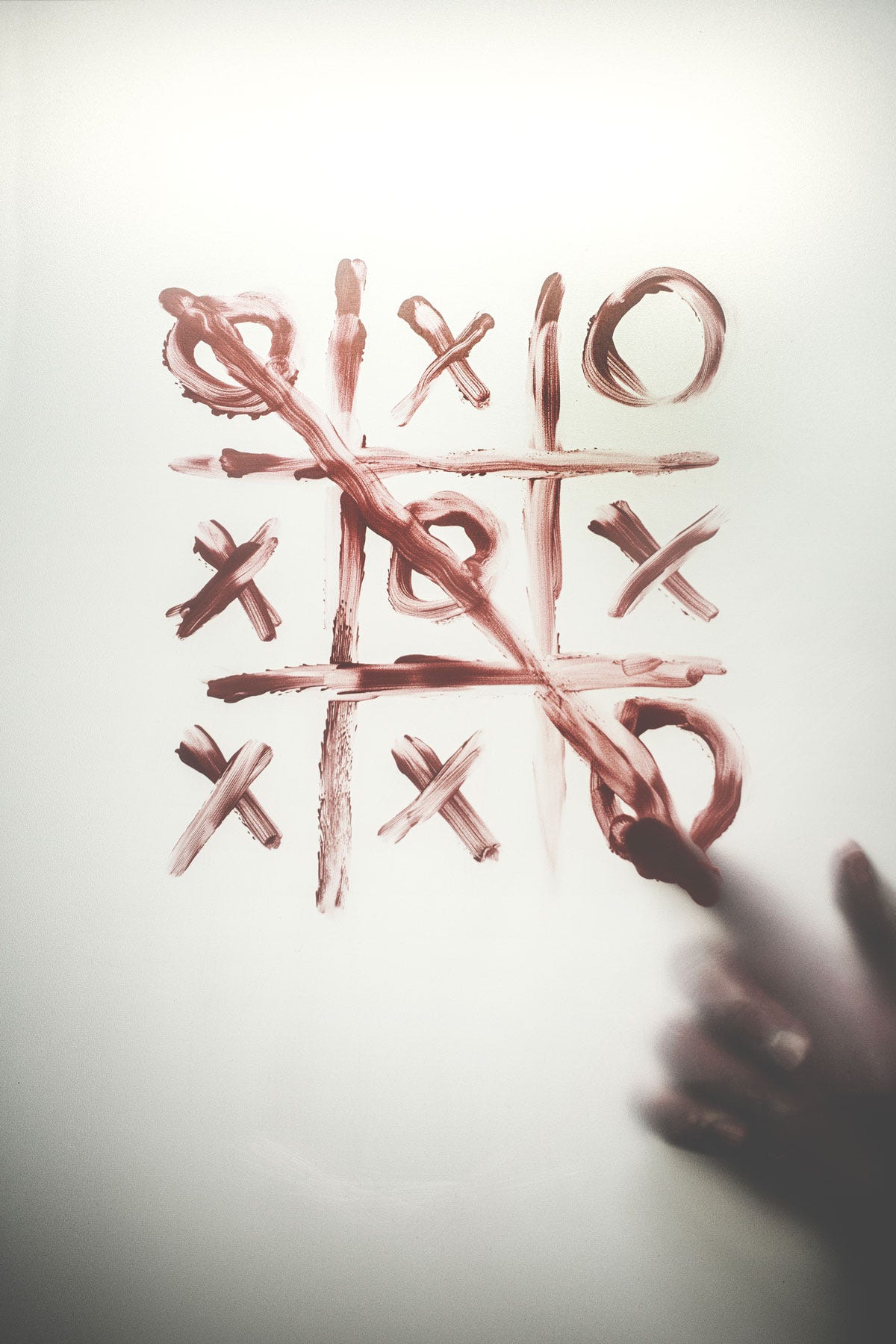
Mistakes Were NOT Made: Bloody Tic Tac Toe Game

Mistakes Were NOT Made:
An Anthem for Justice

by Margaret Anna Alice

The Armenian Genocide was not a mistake.
Holodomor was not a mistake.
The Final Solution was not a mistake.
The Great Leap Forward was not a mistake.
The Killing Fields were not a mistake.

Name your genocide—it was not a mistake.
That includes the Great Democide of the 2020s.
To imply otherwise is to give Them the out they are seeking.

It was not botched.
It was not bungled.
It was not a blunder.

It was not incompetence.
It was not lack of knowledge.
It was not spontaneous mass hysteria.

The planning occurred in plain sight.
The planning is still occurring in plain sight.

The philanthropaths bought The $cience™.
The modelers projected the lies.
The testers concocted the crisis.
The NGOs leased the academics.
The $cientists fabricated the findings.
The mouthpieces spewed the talking points.

The organizations declared the emergency.
The governments erected the walls.
The departments rewrote the rules.
The governors quashed the rights.
The politicians passed the laws.
The bankers installed the control grid.

The stooges laundered the money.
The DoD placed the orders.
The corporations fulfilled the contracts.
The regulators approved the solution.
The laws shielded the contractors.
The agencies ignored the signals.

The behemoths consolidated the media.
The psychologists crafted the messaging.
The propagandists chanted the slogans.
The fact-chokers smeared the dissidents.
The censors silenced the questioners.
The jackboots stomped the dissenters.

The tyrants summoned.
The puppeteers jerked.
The puppets danced.
The colluders implemented.
The doctors ordered.
The hospitals administered.

The menticiders scripted.
The bamboozled bleated.
The totalitarianized bullied.
The Covidians tattled.
The parents surrendered.
The good citizens believed … and forgot.

This was calculated.
This was formulated.
This was focus-grouped.
This was articulated.
This was manufactured.
This was falsified.
This was coerced.
This was inflicted.
This was denied.

We were terrorized.
We were isolated.
We were gaslit.

We were dehumanized.
We were wounded.
We were killed.

Don’t let them get away with it.


Source: Margaret Anna Alice Through the Looking Glass


Disqus