Click here for Exit the Cuckoo's Nest's posting standards and aims.
Click here to sign the People's Proclamation and send it to everyone you know.
Source: The Unz Review

 RSS
RSS

On Wednesday, the Biden administration labeled the Houthis a “Specially Designated Global Terrorist group,” opening the door to the imposition of sweeping sanctions. Aid groups immediately responded with warnings that the designation threatens to greatly intensify Yemen’s humanitarian crisis. As a result of the almost decade-long war the Saudi regime has waged on Yemen with US arms and logistical support, more than half of the country’s population—over 18 million people—need food and other assistance…US Imperialism Setting Middle East Ablaze, World Socialist Web Site
The Biden administration is in the process of reimposing the 7 year-long embargo on Yemen that cut off food, water and essential medical supplies to the civilian population. This is how Washington weaponizes the “terrorist” designation in order to use famine as an instrument of foreign policy. The clear intention is to starve the population into submission so the US can advance its geopolitical agenda in the region. In this case, Washington’s strategic objectives remain largely concealed from the general public, so we will list them here:
The United States has three main goals in Yemen:
- To eliminate an ally of Iran. (The Houthis)
- To control critical shipping lanes in the Red Sea.
- To construct an oil pipeline across Yemen in the event that the US launches a war on Iran and shipping in the Strait of Hormuz is disrupted.
Now that Israel is moving ahead with its ethnic cleansing operation, we can add a forth objective to the list: - To militarily engage any army or militia in the region that tries to derail Tel Aviv’s territorial ambitions.
Keep in mind, the current war is not merely an expansion of Israeli territory, but an attempt to establish Israel as the regional hegemon. Israel aspires to be the dominant power in the Middle East unopposed by its current set of rivals. The Biden administration is assisting in that project mainly because US interests coincide with Israel’s long-term plans. Check out this excerpt from an article at the World Socialist Web Site:
The genocide in Gaza is an integral part of US imperialism’s strategy of global war in pursuit of world hegemony. It is one front in an emerging world war, along with Washington’s proxy war against Russia in Ukraine, its escalating war throughout the Middle East, whose central target is Iran, and its war preparations against China. Bernie Sanders backs US attack on Yemen, World Socialist Web Site
In short, US global ambitions segue perfectly with Israel’s regional strategy. Neither country believes it can achieve its broader aims through peaceful means due in part to the lack of critical resources and flagging economic output. So military aggression is the only path forward. The primary targets in the impending conflict are Iran, Russia and China. Here’s more from the World Socialist Web Site:
These actions are preparatory to a head-on clash with Iran that could come at any time. Not only has the Pentagon planned for such war for decades, but, from the standpoint of US imperialism, its strategic aims have never been more vital than today, when the US is in a de facto war with Russia and plotting for war with China. Its goal in targeting Iran is to secure unbridled dominance over the world’s principal oil-exporting region, a region uniquely positioned to project geopolitical power across Eurasia, Africa and the entire Indian Ocean region…
The reality is that these are different arenas in a rapidly developing global conflict, as US imperialism desperately seeks to offset the decline in its relative economic power and establish global hegemony though war, plunder and the revival of colonial subjugation.
…the dynamic across the Middle East is one of rapid escalation toward a regional conflagration led by Washington, its imperialist allies and their principal regional client, Israel. US imperialism setting Middle East ablaze, World Socialist Web Site
Yemen is a small but crucial part of the overall strategy. The billionaire elites who use political agents to implement policy, are determined to eradicate the threat to commercial shipping in the Red Sea posed by the Houthis. This is the underlying motive behind Washington’s drive to war. Not surprisingly, it was also the proximate cause for the Saudi-led intervention although the media diverted attention to the less-consequential political power struggle.
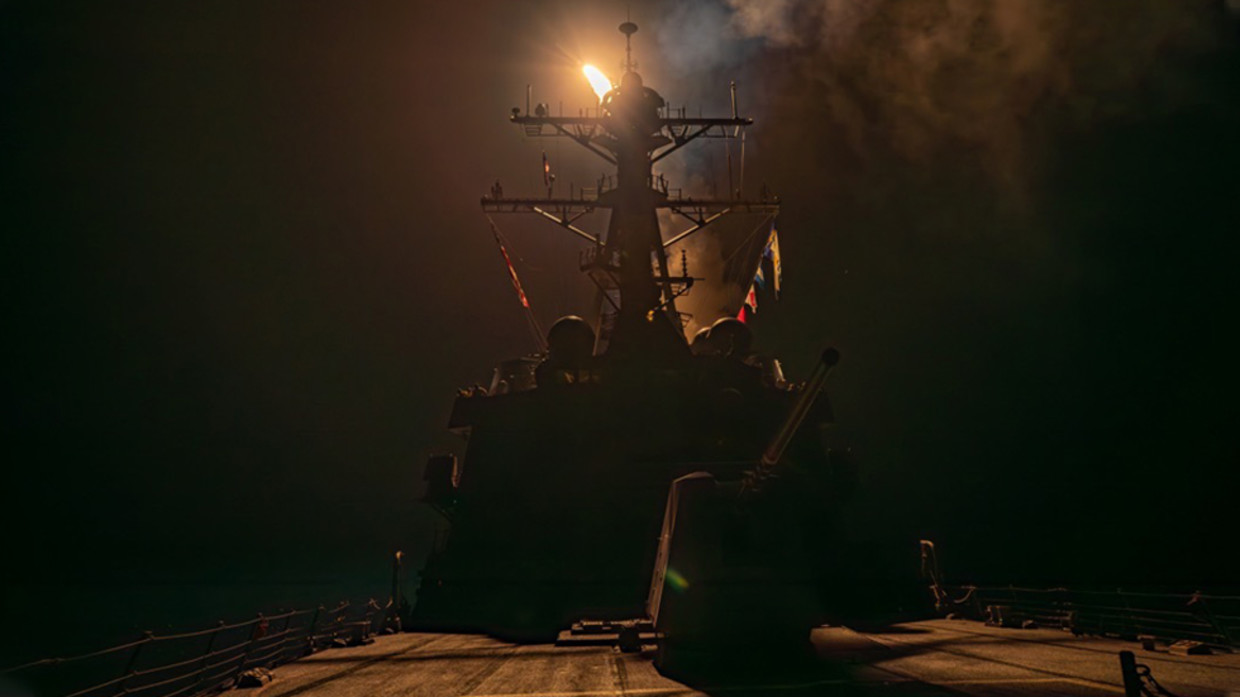
The truth is, Washington’s current war on Yemen is merely a continuation of the Saudi-Houthi conflict. In 2015, the Saudis spearheaded a coalition of 9 Arab countries (backed by the United States) that conducted massive airstrikes on the country while imposing a naval blockade that resulted in the deaths of hundreds of thousands of Yemenis. The ostensible goal of the intervention, was to prop up Washington’s preferred political leader, Abdrabbuh Mansur Hadi. Had the Saudis prevailed in the conflict, the US would have achieved its main strategic objectives without having to involve itself in the actual fighting. But the Saudis did not win which is why there has been a lull in the action while US foreign policy elites concocted another plan for eliminating the Houthis and delivering the strategically located Yemen into the trusted hands of a US-backed puppet. (Sound familiar?) The recent outbreak of hostilities between the US and the Houthis over the Houthis blockade of commercial ships linked to Israel, has provided the US with an opportunity to lock-horns with the Arab militia and use its firepower advantage to rout the enemy and achieve what Washington’s proxies (The Saudis) could not achieve.
While the present war between the US and Yemen is still in its early stages, (Note: The US has conducted 5 major airstrikes on Houthis positions on the mainland while the Houthis have attacked 4 commercial ships in the last 5 days.) US chances of winning are not that encouraging. The Houthis are a well-organized, highly-motivated, battle-hardened killing machine that’s familiar with the terrain and has good grasp of how the US likes to conduct its wars. If the United States couldn’t beat the Taliban, they shouldn’t count on beating the Houthis.
Then, of course, there is the question of ‘how well-equipped’ the Houthis are. Take a look:
Over just a few years, Houthi rebels in Yemen have amassed a remarkably diverse array of anti-ship weaponry, incorporating both cruise and ballistic missiles, which they have recently used to threaten shipping in the Red Sea…
In parades in 2022 and 2023, the Houthis unveiled additional ASCMs, including what appeared to be two anti-ship versions of the Iranian Quds/351 LACM. One version is allegedly equipped with a radar-homing seeker (Sayyad), and the other has an electro-optical/infrared seeker (Quds Z-0).
..
…they possess other ISR assets, including UAVs, (drones) nominally civilian vessels used for scouting, open-source information on maritime traffic and data gathered by the Behshad, an Iranian cargo vessel anchored in the Red Sea reported to serve as an Islamic Revolutionary Guards Corps forward-operating and reconnaissance base. It also seems likely that Iran has equipped the group with coastal radar systems.The extensive Houthi arsenal raises questions about Iran’s broader strategy in the region. … That suggests a strong, long-term Iranian focus on strengthening Houthi anti-ship capabilities and a potential attempt to export Iran’s model of naval coercion from the Persian Gulf and the Strait of Hormuz to the geopolitically important Red Sea and Bab el-Mandeb Strait. Houthi anti-ship missile systems: getting better all the time, IISS
What does this excerpt tell us?
It tells us that the Houthis are a well-armed military force that has equipped itself with the particular weapons it needs for warfare on the Red Sea. It tells us that the Houthis knew there would eventually be a war with the United States for which they would have to be well prepared. It tells us that the US is probably going to suffer significant losses in the conflict ahead and that the fighting will drag on for a number of years disrupting transit on the Red Sea, inflicting massive damage to global supply-lines, and further strengthening anti-American coalitions. All of this could have avoided had the Biden administration chosen to pressure Israel into ending its siege of Gaza and allowing humanitarian aid to reach the Palestinian people. But they chose not to do so.
It’s worth mentioning, that Houthi spokesmen have repeatedly stated that they will only attack US, UK and Israel-linked ships on the Red Sea. All other ships will be permitted to sail the waterway freely without any threat to their safety. The media has tried to mislead the public on this matter by insisting that the attacks are random and indiscriminate, but that is not the case. Here’s a recap from Iran’s Press TV:
Yemen’s Ansarullah resistance movement has promised a “safe passage” for international ships sailing in the Red Sea as the country’s armed forces ramp up their retaliatory attacks on Israeli-owned and -bound vessels in support of Palestinians in the besieged Gaza Strip.
Mohammad al-Bakhiti, a member of Ansarullah’s politburo, made the statement in an interview published by the Russian daily Izvestia on Friday and said the Red Sea was safe so long as ships transiting the strategic waterway were not linked to Israel.
“As far as ships from all other countries, including Russia and China, are concerned, their navigation in the region is not under any threat whatsoever… Moreover, we are ready to ensure the safe passage of their ships in the Red Sea, because free navigation plays a significant role for our country,” he added.
Stressing that attacks on vessels “in any way connected with Israel” will continue, Bakhiti said, “Ansarullah does not pursue the goal of capturing or sinking this or that sea vessel. Our goal is to raise the economic costs” for the Israeli regime “in order to stop the carnage in Gaza.” (Press TV)
It’s a sad day when Iranian state media can be trusted more than any of the hundreds of western news agencies, but that is the state of western media today.
By the way, over 50 humanitarian organizations have joined together (virtually overnight) to voice their opposition to Biden’s labeling of the Houthis as a Specially Designated Global Terrorist (SDGT). Here’s a brief excerpt from their statement:
While the Houthis share much blame, alongside the Saudi/UAE-led coalition, for horrific human rights violations in Yemen, the designations do nothing to address these concerns. They will, however, prevent the delivery of critical humanitarian assistance to millions of innocent people, greatly hurt the prospects for a negotiated settlement to the conflict, and further undermine U.S. national security interests in the region. Our coalition joins a chorus of growing opposition to the designation, including a bipartisan group of members of Congress, multiple humanitarian organizations operating on the ground in Yemen, and former career diplomats who have served both Republican and Democratic presidents.
Rather than being a catalyst for peace, these designations are a recipe for more conflict and famine, while unnecessarily further undermining U.S. diplomatic credibility.”50 Group Coalition Calls on Biden to Reverse Houthi Terrorist Designation, FCNL
The reason we’ve reprinted the statement here, is because the administration and media have been insisting that the “terrorist” moniker will not lead to mass starvation when, in fact, that’s precisely what it’s designed to do. Biden’s policy is intended to starve Yemen into submission. We need to be clear about how the policy works. The administration plans to kill people in the most agonizing way imaginable to assert control over a scrap of land that is 8,000 miles away from the United States.
We should also be clear as to why the Saudis finally lifted the eight-year-old restrictions on imports headed for Yemen in April 2023. It wasn’t because the Saudis were suddenly struck by pangs of remorse. No. It was because the resourceful Houthis started bombing oil fields and critical infrastructure in Saudi Arabia. That’s what forced the reprobate Saudis back to the bargaining table. Here’s the story from Aljazeera:
Yemen’s Houthis rebels have acknowledged a series of attacks on Saudi Arabia after state media in the kingdom reported rocket and drone strikes targeting an oil depot in Jeddah and other facilities in Riyadh.
A huge plume of black smoke was seen rising from the plant in Jeddah, as the city prepared to host a Formula One race on Sunday. Houthi military spokesperson Yahya Sarea said the group attacked Aramco’s facilities with missiles and the Ras Tanura and Rabigh refineries with drones. Sarea added that the attack also targeted vital facilities in the Saudi capital Riyadh.
The attacks targeted “Aramco facilities in Jeddah and vital facilities in the capital of the Saudi enemy, Riyadh”… Facilities of oil giant Aramco were also attacked in Jizan, Najran, Ras Tanura and Rabigh with “a large number of drones”, he added. (Aljazeera)
These attacks took place in March 2022. It wasn’t long after that the Saudis came to their senses and began to seek a negotiated settlement. (Funny how that works.) We fully expect that the current conflagration will produce the same result. As Washington’s war on Yemen gains pace, the Houthis will undoubtedly target Saudi Arabia’s state-run oil facilities sending global shares tumbling while oil prices go through the roof. We think this scenario could prompt emergency diplomacy that could end the hostilities before matters really get out of hand. (That is our hope, at least.) Unfortunately, we have no crystal ball so we’ll have to see how things play out. Check out this brief clip from Trita Parsi of the Quincy Institute who mulls-over an entirely different scenario that no one in the administration has even considered. Here’s what he said:
There is a simple reason why U.S. and U.K. military strikes against Yemen’s Houthis will not achieve their objective of re-opening the crucial Red Sea lanes for international shipping: The Houthis don’t have to succeed in striking additional commercial vessels, or even successfully retaliate against U.S. military ships. All they need to do is to try. That is enough to sustain a de facto shipping blockade of the Red Sea, through which a staggering 12% of global trade flows. Many Western commercial vessels will simply not risk moving their ships through those waters, not in spite of President Joe Biden’s military strikes, but now because of them. How Biden Can Stop Houthi Missile Attacks—Without Risking War, Time
Bingo. The Houthis don’t have to defeat the US in order to win the war. They just have to outlast the US by continuing to threaten commercial transport on the Red Sea. That’s all they need to do. And, with their prodigious stockpile of ballistic missiles and attack drones, they should be able to sustain that effort for years to come, perhaps, forever. Has anyone on the Biden team even thought about that?
We’re convinced that the Biden administration is barking up the wrong tree. There is no military solution to the Houthis blockade on the Red Sea. The US has already launched 5 massive aerial strikes on Yemen blasting more than 70 sites, without any indication that the Houthis offensive capability has been even slightly degraded. For all practical purposes, the current strategy is a complete bust, no material benefit whatsoever.
At the same time, the Houthis have launched their own missile attacks on passing commercial ships 4 out of the last 5 days. The success of these attacks cannot be measured in terms of how many ships were sunk (which is not the goal) but in terms of how many carriers are presently avoiding the world’s most important transit corridor. That number continues to grow by the day which means that –by any concievable metric– the US is losing the war. Which means that Biden is going to up the ante.
But how will escalation change the eventual outcome? Will the deploying of US Special Forces or ground troops to the Arabian peninsula ensure an American victory or should we expect another 20-year Afghanistan-type quagmire? And is the administration really prepared for the inevitable economic slump and stock market turmoil when the sh** hits the fan and the Saudi oil fields are consumed by flames while the shelling of US bases in Iraq and Syria intensifies to a thundering crescendo? Shouldn’t they at least give that a passing thought? Here’s one last excerpt from the World Socialist Web Site:
The launching of military strikes against Yemen marks a new stage in the deepening imperialist military offensive throughout the Middle East and beyond. The US and its imperialist allies are waging a de facto war against Iran, working to eliminate Iran’s military allies throughout the Middle East. The strikes against Yemen are directed at encircling Iran and provoking it into retaliation against US forces, which could be used to justify a full-scale war against Tehran….
Overriding all of this, the United States is involved in a struggle to fend off the challenge posed by China to its global hegemony, which threatens to trigger a shooting war in the Pacific. In the US media and political circles, there is growing talk of a new “axis of evil” involving Iran, China and Russia.
Each one of these conflicts cannot be understood in isolation. The bombing of Yemen is part of a global counter-revolution, in which the imperialist powers are seeking to reestablish direct control over their former colonies…
Every war launched by the US and its imperialist allies has ended in one bloody debacle after the other, with millions of people killed. But each disaster only reinforces the determination of US imperialism to use war as a means to secure its global hegemony.
The US/UK attack on Yemen and the global eruption of imperialist war, World Socialist Web Site
The table is set for a major conflagration in Yemen that will quickly escalate and spread across the entire Middle East. I see no indication that Biden is planning to slow the rush to war or pull back from the brink. This is shaping up to be a real catastrophe.